
Christina Evangelin Ebinezer
Marketing Associate



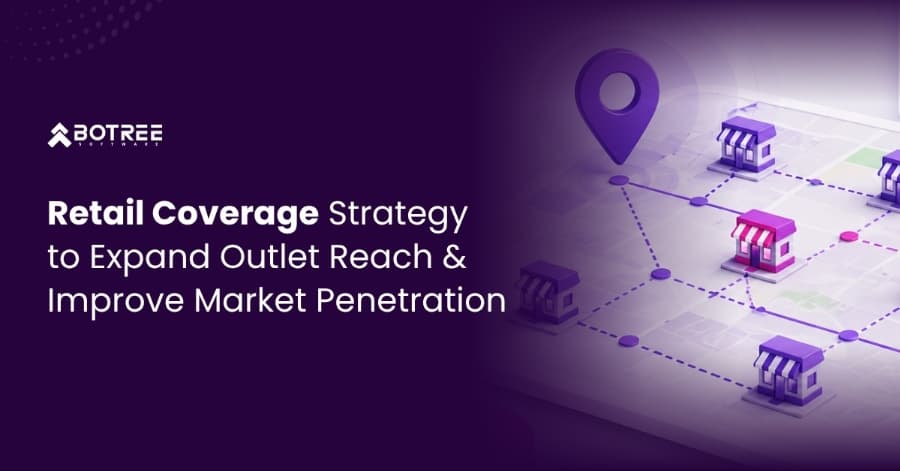
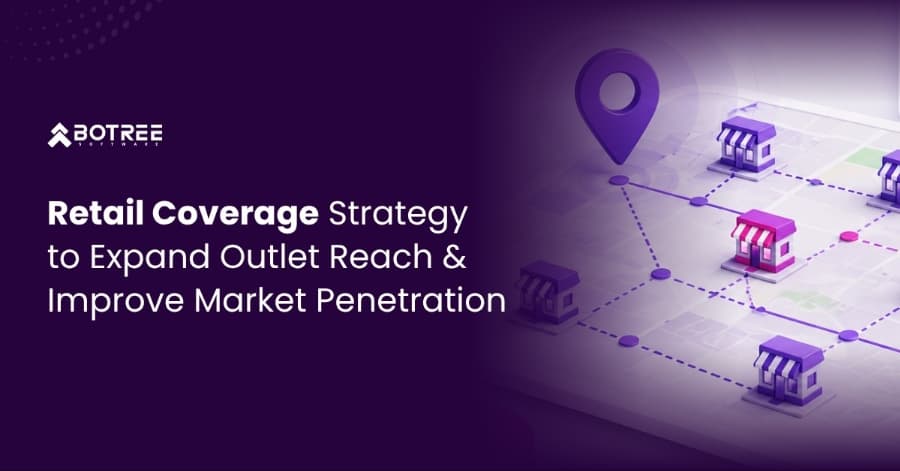
In case of FMCG, CPG, and FMCD, growth of the business depends upon how successfully these products can be made available at the retail stores. The best product range cannot make sales unless it is available through the most appropriate retail network. With expanded retail coverage, companies can cover a greater number of retailers, achieve better product availability, foster stronger relationships with retailers, and make more secondary sales.
The concept of retail coverage is not limited to adding up retail stores any longer. Companies have to find out the most promising retail outlets, focus on the right markets, manage their field sales coverage, and see that every retail outlet gets the desired attention and service. Without a proper strategy for retail coverage, companies usually suffer from poor distribution coverage, non-performing outlets, ineffective retailer servicing, and lost sales opportunities.
A good retail coverage strategy includes market mapping, outlet segmentation, territory management, field execution, and real-time visibility and helps businesses expand their retail network.
In this blog, we’ll explore what retail coverage is, why it matters, the key metrics and strategies that improve retail coverage, how AI is transforming retail expansion, and how technology helps FMCG, CPG, and FMCD businesses grow their retail footprint sustainably.
Retail coverage is the measure of retail coverage that describes how many retail outlets a company serves in its target market using distributors, field force, retailers, or online ordering methods. This metric indicates how well a product line has been able to reach the retailers and communicate with them, keeping their stock available.
There is a common misunderstanding that distribution and retail coverage are the same things. However, distribution deals with delivering products to consumers, whereas retail coverage involves making sure that retailers are reached and serviced by conducting various activities.
Retail coverage is typically measured using three key metrics:
An effective retail distribution strategy takes into consideration all the above three indicators. If an organization concentrates exclusively on numeric distribution, the result could be increased retail outlets, but without any improvement in weighted distribution and active distribution, organizations would not be able to tap into their full retail possibilities.
Typically, retail coverage is viewed as field operations KPI calculated in terms of outlet calls and beat closure rate. It is a strategically important business decision which dictates how large a market share a brand will be able to achieve. The quality of a retail coverage strategy is a major factor influencing the level of market penetration, product availability, relationship with retailers and sustainable revenue growth.
Expanding retail coverage requires more than adding new outlets. Businesses need a balanced strategy that increases market reach, improves retailer engagement, and maximizes the value of every outlet in the distribution network.
Increasing retail network through the recruitment of new retailers, venturing into new markets, and rejuvenation of existing but inactive retailers goes a long way in assisting companies in increasing their numeric distribution and market penetration. Outlet mapping and white space analysis also play a key role in identifying areas that can provide growth opportunities.
All retail outlets do not contribute the same amount towards the growth of the company. Segmentation of retailers according to the sales potential, location and category demands would assist businesses in allocating their field resources better.
Proper beat plan would help the sales representatives visit the right retailers within the desired frequency. The frequency of visiting the high-value retailers could be more than once a week, whereas other outlets can be visited less often.
Market execution will bear fruits only through all effective visits. Order placement, range selling, merchandising, trade promotions execution, retail auditing, and perfect store execution can help enhance secondary sales and market execution in general.
Market coverage analysis needs to be done on a regular basis to spot the inactive retailers, decreasing outlet effectiveness, and new market opportunities. Analysis of active outlet coverage, secondary sales, and retailer relationship will assist in expanding your business network.
For many FMCG, CPG, and FMCD businesses, the next phase of growth lies in tier 2, tier 3, and rural markets. While these regions offer significant opportunities to expand retail coverage and market penetration, they also present unique distribution and execution challenges that require a different approach from urban markets.
Expanding retail coverage across thousands of outlets requires more than manual planning and field supervision. AI-powered retail execution platforms help FMCG, CPG, and FMCD businesses improve outlet coverage, optimize field activities, and make faster, data-driven decisions that strengthen market penetration.
Botree AI-powered route-to-market suite helps FMCG, CPG, and FMCD businesses build stronger retail coverage by connecting field execution, distributor operations, retailer engagement, and secondary sales visibility on a single platform. The platform enables businesses to optimize beat planning, verify outlet visits, onboard new retailers, capture orders digitally, and monitor field execution in real time, ensuring sales teams consistently cover the right outlets with the right visit frequency.
Beyond field execution, Botree provides real-time visibility into secondary sales, distributor inventory, and retailer performance, helping businesses identify dormant outlets, uncover white-space opportunities, prioritize high-potential retailers, and improve active outlet coverage. It also extends visibility into tier 2, tier 3, rural, and multi-brand distribution networks without disrupting existing distributor workflows, allowing brands to expand market reach across traditionally difficult-to-manage territories.
With integrated retailer ordering, AI-powered analytics, and unified retail coverage dashboards, Botree enables businesses to monitor numeric distribution, weighted distribution, active coverage, product availability, and market penetration from a single source of truth. By combining intelligent planning, real-time visibility, and data-driven decision-making, Botree helps brands expand retail reach, strengthen retailer relationships, improve secondary sales, and achieve sustainable revenue growth across every channel.
35,000+ Outlets Added
“Botree Software has helped us streamline operations, enabling end-to-end visibility of our sales operations and market coverage. This visibility helped us identify billed and unbilled outlets, thus expanding our market presence, adding over 35,000+ new outlets within just a few months”.
Sridhar Vaidhyanathan
COO MK Agrotech
Read Case Study to Know More
Retail coverage goes beyond merely counting the number of outlets that a brand reaches. This refers to an important capability that helps brands determine how well their products penetrate the market, engage with the retailers, and create potential to generate revenue through the distribution channel.
Most brands that focus on adding more outlets in their distribution network fail to consider the essential aspects of growth – servicing outlets, having active coverage, enhancing the quality of visits, and optimizing performance through real-time data. The process of sustainable penetration in the market can be achieved through the balancing act between retail reach and execution.
Given the increasing competition in FMCG, CPG, and FMCD markets, businesses require better insights into their retail networks, rapid decision-making, and improved field execution. With an AI-driven platform, brands can have a clear picture of their gaps in coverage, retailer engagement, product availability, and secondary sales.
Having a proper strategy and right technology in retail coverage allows businesses to grow in new markets, engage with current retailers, enhance penetration in the market, and have a strong footing to ensure future success.

Marketing Associate
Meet Christina Evangelin Ebinezer, our dynamic marketing associate at Botree Software. With a background in HR and marketing, and prior experience as a content writer, Christina brings a sharp eye for storytelling and a knack for crafting engaging blogs and marketing content. She’s passionate about turning ideas into words that drive impact. Outside of work, Christina finds joy behind the piano keys or the wheel—whether she’s playing a soulful tune or cruising down open roads.
What is retail coverage in FMCG?
What is the difference between retail coverage and market penetration?
Why is retail coverage important for FMCG brands?
What are the key retail coverage metrics businesses should track?
How can businesses improve retail coverage?
How does retail coverage improve secondary sales?
What role does Sales Force Automation (SFA) play in retail coverage?
How does Distributor Management System (DMS) improve retail coverage?
How does AI help improve retail coverage?
How does Botree help businesses expand retail coverage?

Stay updated with the latest trends and insights.