
Christina Evangelin Ebinezer
Marketing Associate



The field force teams play an important role in distribution-led companies in making sure that products reach their correct destination outlets, retailers are visited frequently, and that sales objectives are met. But having a large field team without real-time information leads to non-visit of outlets, non-compliance of beats, delayed reporting, and improper field execution.
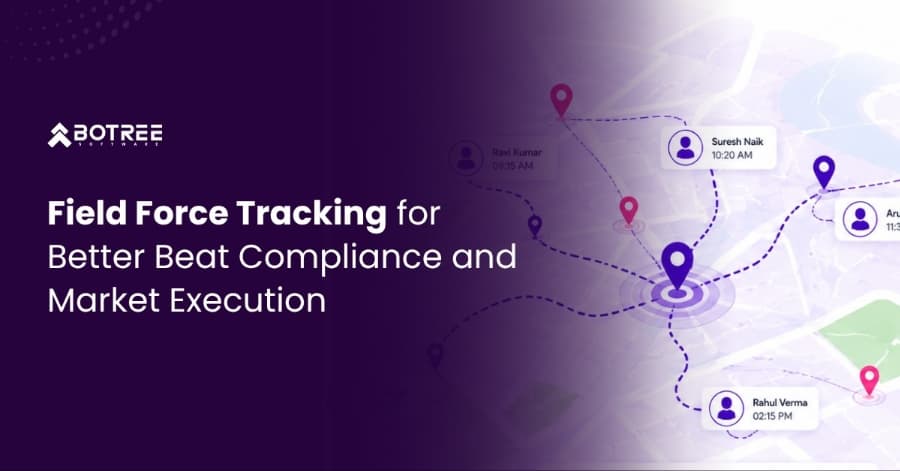
Field force tracking enables companies to know where their sales reps are, who are the outlets they visit, how well they execute their beats, and how their field execution impacts their business operations. Rather than waiting for updates and end-of-the-day reports, managers get real-time insights into field execution, allowing them to make quicker decisions and take action accordingly.
In this blog post, we will discuss field force tracking in detail, its importance for FMCG, CPG, and FMCD companies, the KPIs that should be monitored, tips to improve field execution, and the role of AI in field force tracking in 2026.
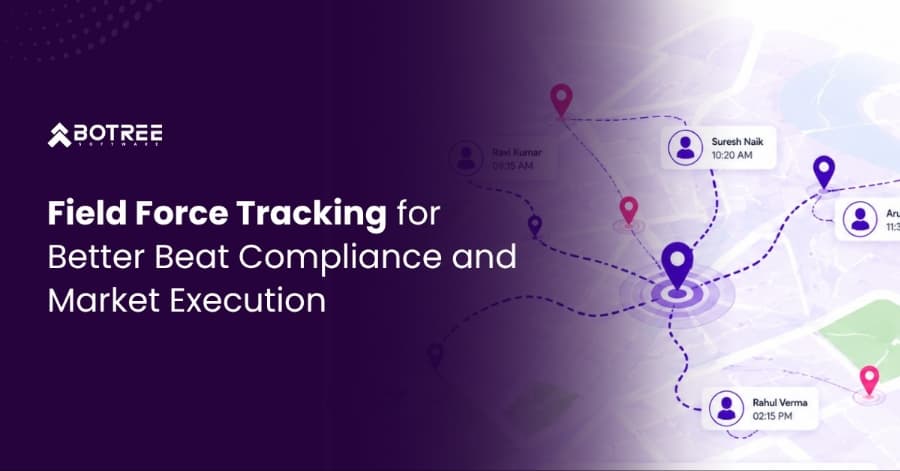
Field force tracking can be defined as the practice of real-time monitoring of field sales activities to identify the location of sales personnel, what they do, which outlets they visit, and the level at which they perform their tasks. It involves more than just location tracking and takes into account the relationship between field activities and sales execution.
While location via GPS indicates only the place where the sales personnel are located, field force tracking includes all aspects of field execution.
A modern field force tracking solution enables businesses to monitor:
Together, these insights provide businesses with a complete picture of field execution, helping managers identify performance gaps, improve sales productivity, strengthen beat compliance, and ensure their market execution strategy is consistently delivered across every territory.
Field force tracking is often positioned as a management control tool—a way for sales leaders to verify that sales representatives are where they said they would be. That framing undersells what is actually at stake. For FMCG, CPG, and FMCD businesses, field force tracking is a commercial capability that improves beat compliance, strengthens market execution, and helps businesses maximize the return on their distribution investments.
For FMCG, CPG, and FMCD businesses, field force tracking is about much more than knowing where sales representatives are. It measures how effectively field teams execute distribution plans, improve outlet coverage, drive secondary sales, and strengthen retail execution. Each metric provides actionable insights that help businesses improve market execution and sales performance.
| Metric | What It Measures | Why It Matters for FMCG, CPG & FMCD |
|---|---|---|
| Beat Adherence | Whether sales representatives visit assigned outlets according to the planned beat and visit frequency. | Ensures consistent retailer servicing, improves outlet coverage, and prevents missed sales opportunities. |
| Outlet Coverage | The number of active retail outlets visited during a sales cycle. | Identifies uncovered or inactive outlets and helps expand distribution reach across territories. |
| Productive Calls | The percentage of outlet visits that result in an order. | Measures the effectiveness of field execution and shows how well retailer visits are converted into secondary sales. |
| Range Selling (Lines per Call) | The average number of SKUs sold during each productive visit. | Indicates how effectively sales representatives expand product assortment and increase order value at every outlet. |
| Retail Execution Compliance | Execution of trade schemes, merchandising standards, product availability, shelf visibility, and Perfect Store guidelines. | Ensures consistent in-store execution, improves product visibility, and increases the effectiveness of trade promotions. |
| New Outlet Addition | The number of new retailers added to the distribution network. | Measures market expansion and helps businesses continuously grow distribution coverage. |
| Secondary Sales per Representative | The secondary sales generated from each sales representative’s territory. | Connects field activities directly to business outcomes and evaluates the commercial impact of field execution. |
| Visit Quality | Time spent at the outlet, retailer engagement, retail audits, and sales activities completed during the visit. | Helps ensure every outlet visit delivers meaningful retailer interaction instead of simply recording attendance. . |
Field force tracking improves market execution through a continuous cycle of visibility, action, and performance improvement. By combining real-time field data with timely managerial intervention, businesses can improve beat compliance, strengthen retailer coverage, and drive better secondary sales throughout the month.
Step 1: Achieving Visibility in Field Force Execution
Field force tracking measures geo-validated visits to the outlets, compliance with beats, productive calls, retail execution, and order booking in real time. The managers have total visibility into all field activities that allows them to detect unvisited outlets, reduction in productive calls, non-compliance with beats, and coverage issues before impacting sales.
Step 2: Identifying and Correcting Issues with Execution
Instead of looking at the reports after a month end, managers can easily detect the execution gaps in terms of high-value outlets that have not been covered, regions where there is a decline in outlet coverage, or those salesmen whose productive call rate is low.
Step 3: Enhancing Field Performance
Using insights from the real-time system, the sales representatives can visit the priority outlets, ensure beat compliance, effectively communicate the active trade schemes, and concentrate on potential retailers. The managers can immediately see the impact of these actions in the form of updated dashboards.
Step 4: Enhance Market Execution and Secondary Sales
With improvements in beat compliance, there will be better efficiency in making visits to outlets, consistent implementation of trade promotions, and improved customer service to retailers. This will help in improving market execution, secondary sales, product availability, and improve sales performance of businesses.
Artificial intelligence is transforming field force tracking from a monitoring tool into an intelligent decision-making system. Instead of simply showing where sales representatives have been, AI helps businesses predict field performance, optimize market execution, and improve sales productivity through real-time recommendations and insights.
Botree AI-powered Route-to-Market platform helps businesses gain complete visibility into field operations by connecting sales representatives, distributors, retailers, and market execution on a single platform. Botree SFA enables businesses to monitor geo-verified outlet visits, beat adherence, route compliance, outlet coverage, productive calls, retail audits, and field activities in real time, while GPS-enabled check-ins and time-at-outlet tracking help ensure every retailer visit is genuine and productive. With AI-powered Beat Planning, sales representatives are guided to prioritize high-potential outlets and optimize daily routes for better market coverage. Product Recommender with Suggested Order Quantity (SOQ) helps sales representatives improve range selling and order value by recommending the right products and quantities based on purchase history, outlet potential, inventory levels, and active schemes. Native DMS integration provides real-time visibility into distributor inventory, secondary sales, pricing, and trade schemes, giving field teams complete commercial context during every outlet visits.
Botree SFA combine beat adherence, outlet coverage, productive calls, retail execution, secondary sales, and field performance into real-time dashboards, while AI-powered alerts automatically identify missed outlet visits, declining productivity, and execution gaps that require immediate attention. Together, Botree enables FMCG, CPG, and FMCD businesses to strengthen beat compliance, improve retail execution, increase field productivity, and drive better market execution across their entire distribution network.
Field force tracking is not merely about knowing the whereabouts of sales reps; it is about knowing how well they perform, engage retailers, and grow the business. In FMCG, CPG, and FMCD organizations, each individual visit impacts product availability, retail execution, secondary sales, and customer relations. The lack of real-time tracking means many execution deficiencies may never be known until they affect sales performance.
Through GPS tracking, beat compliance, retail execution, AI-powered insights, and real-time performance management, companies can ensure that their field force covers the necessary outlets, executes effectively, and adapts to market changes swiftly. It will translate to superior market execution, better retailer coverage, higher field efficiency, and sustainable growth in sales.

Marketing Associate
Meet Christina Evangelin Ebinezer, our dynamic marketing associate at Botree Software. With a background in HR and marketing, and prior experience as a content writer, Christina brings a sharp eye for storytelling and a knack for crafting engaging blogs and marketing content. She’s passionate about turning ideas into words that drive impact. Outside of work, Christina finds joy behind the piano keys or the wheel—whether she’s playing a soulful tune or cruising down open roads.
What is field force management?
How does GPS tracking improve field sales performance?
What is beat management in FMCG?
What is route optimization for field sales?
What is geo-fencing in field force tracking?
How does sales activity tracking improve market execution?
What is retail execution in FMCG?
How does mobile Sales Force Automation (SFA) support field force tracking?

Stay updated with the latest trends and insights.