
Christina Evangelin Ebinezer
Marketing Associate



Motivating field sales forces goes beyond offering rewards. For instance, in FMCG, CPG, and FMCD organizations, salespeople have the responsibility of managing many stores and executing trade promotions while striving to meet high sales targets daily. It is always a difficult task trying to motivate them.
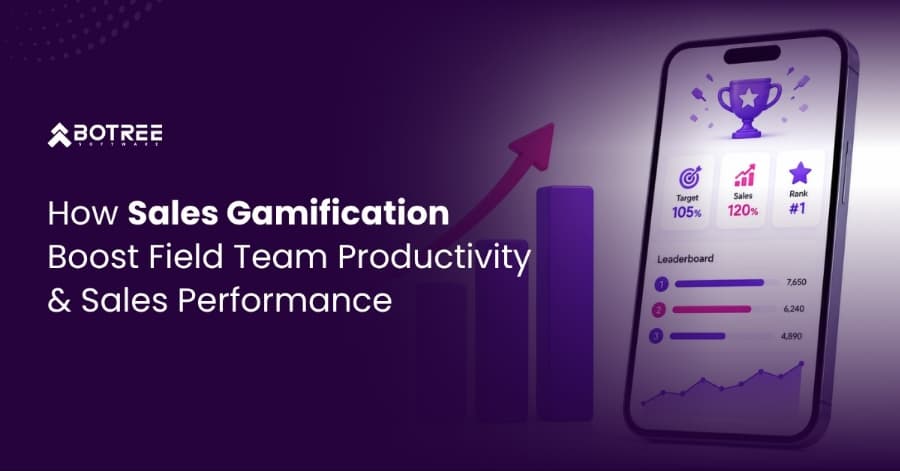
Sales gamification makes it possible by allowing them to turn their everyday sales tasks into accomplishments using leaderboards, points, badges, challenges, and recognition. As opposed to motivating them based on end-of-the-month achievements, it helps you to motivate them the right way throughout the entire process from improving beat adherence to productive calls, increased outlet visits, and secondary sales.
This blog looks at what sales gamification is, why it is important for FMCG, CPG, and FMCD businesses, the steps to creating an effective gamification strategy, and the impact of artificial intelligence on sales motivation.
Sales gamification is the employment of game elements such as points, leaderboards, badges, challenges, and rewards to motivate the field sales team. For FMCG, CPG, and FMCD companies, sales gamification creates the right sales behaviour through measuring, engaging, and rewarding normal activities.
Whereas sales incentives motivate people through rewards based on results achieved after a period of one month or a quarter, sales gamification motivates people continuously during the sales process. The field salespeople are recognized for activities that contribute to the success of the business.
Some of the key gamification elements include:
Field sales success is built through consistent daily execution not just end-of-month results. Sales gamification helps FMCG, CPG, and FMCD businesses motivate sales representatives throughout the sales cycle by rewarding the activities that drive better outlet coverage, higher productivity, stronger retail execution, and increased secondary sales.
The salesperson are mostly out in the field throughout the day where no manager is watching them. Leaderboards, points, challenges, and instant score cards keep motivating the salesperson in real time.
Businesses hire new sales representatives frequently and thus require them to get up to speed and be productive fast. Gamification helps in providing clearly defined goals and quick feedback, which helps the newly hired members know what to do to perform well.
While the best-performing sales reps are naturally very competitive, most of the sales reps fall in the mediocre category. Gamifying the sales process motivates the mediocre reps to improve through set goals, competitions, and milestones.
It takes months to assess the performance of the sales reps based on monthly results. Instead, sales reps can have a clear view of their performance every day by using leaderboards, badges, points, and scorecards.
Routine activities, such as outlet visits, order booking, beat execution, on boarding retailers, and execution of trade schemes, can be made more interesting with the use of sales competitions, achievement badges, seasonal campaigns, and personalized challenges.
A successful sales gamification program motivates the behaviors that improve field execution not just the final sales numbers. By combining the right game mechanics with meaningful business goals, FMCG, CPG, and FMCD businesses can keep field teams engaged while driving measurable sales outcomes.
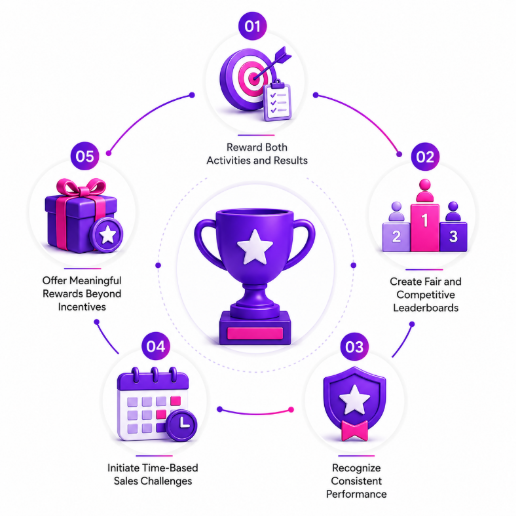
Reward the field sales reps for the activities that will result in successful sales, such as beat adherence, productive calls, range selling, adding new outlets, trading scheme implementation, and secondary sales. Rewarding both the activity and the outcome will drive consistent results throughout the sales process.
Leaderboards should rank the performance of similar territories on similar KPIs instead of the volume of sales alone. Ranks based on KPIs such as productive call rate, target attainment, or outlets covered drive healthy competition among all the sales reps.
The use of badges or milestones rewards behaviours that may not be captured in the leaderboards, such as consistent beat adherence, reaching sales targets, or onboarding of new retailers.
Time-based challenges relevant to the commercial goals of an organization such as introducing a new product, increasing trade scheme enrolment, better outlet coverage, and secondary selling are valuable for directing the field force toward commercial goals, making the process more exciting.
While cash incentives continue to be crucial, the use of incentives in conjunction with recognition, badges, certificates, exclusive offers, and career recognition is more sustainable. The most successful gamification initiatives are those where performance is celebrated and improved continuously.
An effective sales gamification program should motivate the behaviours that drive business outcomes not just reward top performers. When designed around measurable field activities and commercial goals, it creates sustained engagement and improves sales performance.
A strong sales gamification system goes beyond points and rewards. It builds a culture of continuous improvement by encouraging the right field behaviours, motivating every salesperson, and helping organizations improve retail execution, secondary sales, and overall sales performance.
No matter how great your sales gamification software is, it will never work without an effective strategy behind it. Here are the pitfalls you must avoid developing a successful program for FMCG, CPG, and FMCD companies.
With the right selection of performance measures, creation of healthy competition, rewarding improvements and helping managers gain insight in real time, a business can develop a sales gamification strategy that will engage their employees and yield business results.
AI is making sales gamification more intelligent by personalizing challenges, rewards, and performance insights for every sales representative. Instead of running the same contests for everyone, AI helps FMCG, CPG, and FMCD businesses create engaging experiences that improve field motivation while driving better commercial outcomes.
The AI system analyzes each sales rep’s performance, territories, and behaviors in sales and develops personalized challenges to overcome the specific weaknesses of each participant.
With the help of AI, businesses develop fairer leaderboards taking into account such aspects as the potential of territories, types of outlets, productive call ratio, beat compliance, and secondary sales.
Having the knowledge of participation patterns and achievements of sales representatives, AI recommends suitable rewards and recognition, helping companies keep reps motivated for a longer period.
Thanks to AI, performance gaps are detected on time as a result of analyzing sales trends, activity levels, and achievements, which allows for timely coaching of sales representatives to avoid failure in achieving the goals.
AI detects the decline in the participation of the sales force, their completion of challenges, and leaderboard activities, which enables companies to re-engage sales representatives before productivity or retention issues arise.
Through intelligent nudges, such as daily reminders and milestones notifications, AI motivates sales representatives to perform priority activities.
Botree SFA helps FMCG, CPG, and FMCD businesses build an engaging sales gamification program that motivates field teams through real-time leaderboards, points, badges, personalized challenges, and achievement-based rewards. Gamification is embedded into everyday field sales activities, automatically recognizing behaviors such as beat adherence, productive outlet visits, range selling, new outlet additions, trade scheme execution, and target achievement without requiring additional manual effort. Managers gain real-time visibility into team performance, participation, and engagement through interactive dashboards, enabling timely coaching and recognition. Powered by AI and integrated with secondary sales, retail execution, and field performance data, Botree ensures gamification is directly aligned with business outcomes. With offline capability and a mobile-first experience, sales representatives stay motivated and connected across urban, rural, and low-connectivity markets, helping businesses improve field productivity, retail execution, and overall sales performance at scale.
Sales gamification is not merely an avenue for increasing morale but is rather a way to improve field sales execution strategically. Through recognition of appropriate behaviours, fostering of healthy competition, and provision of continuous feedback, FMCG, CPG, and FMCD companies can ensure their sales teams remain motivated while increasing retail execution, secondary sales, and goal attainment.
When sales gamification FMCG is coupled with SFA and AI analysis, its impact on a business is magnified. This is because companies can customize challenges, reward performance consistency, pinpoint coaching needs, and cultivate a continuous improvement culture in all territories.
In an increasingly competitive environment where field sales teams become more dispersed, those who adopt sales gamification have an edge in creating engaged sales teams and ensuring high-quality execution and sustainable revenue generation.

Marketing Associate
Meet Christina Evangelin Ebinezer, our dynamic marketing associate at Botree Software. With a background in HR and marketing, and prior experience as a content writer, Christina brings a sharp eye for storytelling and a knack for crafting engaging blogs and marketing content. She’s passionate about turning ideas into words that drive impact. Outside of work, Christina finds joy behind the piano keys or the wheel—whether she’s playing a soulful tune or cruising down open roads.
How can sales gamification improve field sales productivity?
What KPIs should be included in a sales gamification program?
Can sales gamification increase secondary sales?
How do leaderboards improve sales team performance?
Is sales gamification suitable for large field sales teams?
How does sales gamification support trade promotion execution?
Can sales gamification be integrated with Sales Force Automation (SFA)?
How does AI improve sales gamification?
What rewards work best in a sales gamification program?
What should businesses look for in sales gamification software?

Stay updated with the latest trends and insights.