
Christina Evangelin Ebinezer
Marketing Associate



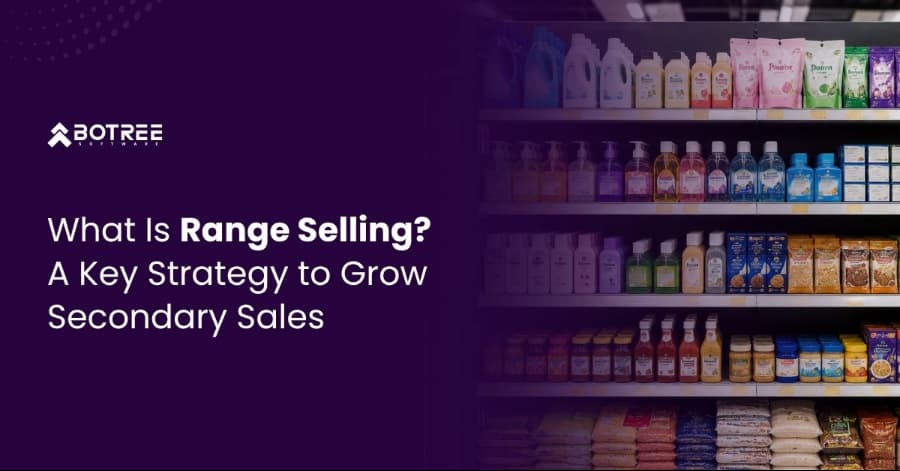
FMCG companies usually place great emphasis on outlet coverage and creating new outlets for their products. Although all these factors are important, many sales growth opportunities lie within those outlets which already carry the products of a particular brand.
If a particular outlet carries two SKUs out of ten, there lies tremendous room for boosting sales figures from that outlet.
This is when Range Selling comes into play. Range Selling is the process of boosting the number of SKUs in an existing retail outlet. Rather than limiting itself to creating new outlets, FMCG companies use Range Selling as a method to enhance product range, increase basket size, build better retailer relations, and achieve secondary sales growth.
In this blog, we will learn about Range Selling, its significance, obstacles which brands face, and Range Selling strategies adopted by top FMCG brands.
Range Selling in FMCG is the process of increasing the number of products or SKUs a retailer purchases from a brand within an existing outlet.
It focuses on improving SKU Penetration, Product Assortment, and Outlet-Level Sales by ensuring retailers stock a broader range of products from the brand’s portfolio.
In simple terms, it answers one question:
“How many of my products is each outlet buying?”
For example,
A retailer currently purchases only shampoo and hair oil from a brand’s portfolio of ten products. If the sales representative successfully introduces face wash, conditioner, and talcum powder into the same outlet, the retailer is now purchasing five SKUs instead of two.
Range Selling is one of the fastest and most cost-effective ways to grow sales because it focuses on increasing revenue from outlets that are already part of the distribution network.
Here’s why it matters:
Opening new outlets requires effort, investments, and time. Range Selling helps the brand increase their Secondary Sales through the higher number of SKUs sold in the existing outlet customer base.
There are many retail shops where the retailer keeps only a few SKUs of the product range. Through Range Selling, the number of products offered at one outlet can be increased to improve the SKU penetration.
Most FMCG brands already have thousands of active outlets that buy only a fraction of their portfolio. Range Selling helps unlock this hidden revenue opportunity by increasing the number of SKUs sold within existing outlets.
Greater range within the outlets means there is a higher probability of consumer finding what they want to buy. This makes Product Availability better.
Introduction of new products in the outlets where the brand is already present is usually easier compared to obtaining new retailers. Range Selling helps to increase the success of introduction of new products.
More SKUs typically translate into more shelf space. By increasing assortment depth within an outlet, brands can improve Share of Shelf, strengthen visibility, and reduce competitor dominance.
It is common for many people working in the FMCG sector to use the terms “Range Selling,” “Numeric Distribution,” and “Weighted Distribution” to refer to the same thing. They are all about growth in distribution, but each one measures totally different things and answers totally different questions.
The importance of knowing how to differentiate the two cannot be understated. Each one is responsible for its own sales growth and market penetration.
| Metric | Range Selling | Numeric Distribution | Weighted Distribution |
|---|---|---|---|
| Measures | Number of SKUs sold per outlet | Percentage of outlets stocking the product | Percentage of category sales represented by outlets stocking the product |
| Focus | Assortment depth | Distribution reach | Distribution quality |
| Key Question | How many products is each outlet buying? | How many outlets stock my product? | Am I present in the outlets that drive category sales? |
| Growth Lever | More SKUs per outlet | More outlets | Better outlets |
| Primary Objective | Increase secondary sales from existing outlets | Expand market coverage | Improve presence in high-value outlets |
| Example | Outlet buys 8 SKUs instead of 3 | Product available in 7,000 instead of 5,000 outlets | Product available in outlets contributing 75% of category sales instead of 50% |
In simple terms:
The most successful FMCG brands improve all three simultaneously to maximize market reach, distribution quality, and secondary sales growth.
Improving Range Selling is not about pushing more products into every outlet. It is about ensuring the right products are available in the right outlets based on demand, outlet potential, and buying patterns.
All channels do not require the entire range of SKUs to be present. Every grocery store, drug store, electrical stores, or kirana outlets will have different channel requirements. Categorization of channels based on potential and relevance improves SKU performance in the channel.
The majority of FMCG/CPG channels buy very few SKUs of a certain brand range. SKU penetration enhancement into existing channels can be the most effective way of boosting sales through these channels.
Before launching any new products, brands need to make sure the core or fast-moving SKUs are available all the time. Lack of key SKUs hinders effective Range Selling.
Similar outlets should carry similar assortments. An analysis of the secondary sales data would help find gaps in SKUs and identify opportunities for cross selling in the entire retail distribution network.
The introduction of new flavor, packs, premium variants, category extensions, and new products needs to be planned for those outlets who carry any of the SKUs from the same portfolio.
Instead of recommending the same products to all retailers, sales teams need to recommend based on outlet type, purchase behavior, and category performance.
Increasing the lines of SKUs per bill increases the basket size, outlet productivity, and secondary sales without acquiring any more outlets.
Tracking of SKU penetration at the outlet level, territory level, and distributor level would help determine areas where assortment expansion is possible.
In today’s FMCG, FMCD, and CPG markets, managing product portfolios across thousands of outlets has become increasingly complex. Sales teams can no longer rely solely on experience and manual outlet reviews to identify assortment gaps and Range Selling opportunities. As product portfolios expand and retail networks become more fragmented, technology plays a critical role in helping brands improve SKU penetration, optimize assortments, and grow secondary sales more effectively.
Visibility is one of the largest challenges for implementing Range Selling, and that’s where modern SFA and DMS platforms come in handy by giving you visibility on your SKUs’ distribution through territories, distributors, and outlets to help you find gaps in your assortment and ways to grow.
Based on the purchasing history, type of outlet, category performance, and purchasing behavior, AI algorithms give recommendations about relevant SKUs to your field team to help them cross-sell more products, raise the number of Lines Per Bill, and penetrate new SKUs in your distribution network faster.
Real-time dashboards allow you to track the penetration of your SKUs and compliance with the product assortment as well as secondary sales performance of your SKUs.
Beyond these functionalities, technology also enables outlet-level assortments, Suggested Order Quantity (SOQ), buyer behavior, compliance, and distribution analysis. All these functionalities work together for brands to help them increase their availability, depth of assortment, and grow their secondary sales sustainably.
Botree helps FMCG, FMCD, and CPG brands improve Range Selling by combining outlet intelligence, secondary sales visibility, and AI-driven field execution into a single platform.
Using OutletPulse, sales teams can identify assortment gaps, outlet productivity trends, and growth opportunities across their retail network. Botree AI Product Recommender analyzes outlet purchase history, outlet type, and buying patterns to suggest the most relevant SKUs for each outlet, helping field teams increase SKU penetration and improve Lines Per Bill.
Botree’s integrated SFA and DMS solutions provide visibility into SKU-level sales, product availability, and assortment performance, enabling managers to track Range Selling opportunities and execution gaps in real time. Gamification, performance tracking, and intelligent nudges further help drive consistent field execution and encourage sales teams to focus on assortment expansion.
By combining outlet intelligence, AI recommendations, and real-time execution visibility, Botree helps brands improve product assortment, strengthen outlet productivity, and drive sustainable secondary sales growth.

Marketing Associate
Meet Christina Evangelin Ebinezer, our dynamic marketing associate at Botree Software. With a background in HR and marketing, and prior experience as a content writer, Christina brings a sharp eye for storytelling and a knack for crafting engaging blogs and marketing content. She’s passionate about turning ideas into words that drive impact. Outside of work, Christina finds joy behind the piano keys or the wheel—whether she’s playing a soulful tune or cruising down open roads.
What is SKU Penetration in FMCG?
How does Range Selling improve Secondary Sales?
What is the difference between Range Selling and Product Assortment?
Why is Must-Stock SKU Compliance important for Range Selling?
How do AI Product Recommendations improve Range Selling?
What role does Secondary Sales Data play in Range Selling?
Stay updated with the latest trends and insights.