
Christina Evangelin Ebinezer
Marketing Associate



Having a great product is just one way to succeed in today’s highly competitive business environment. However, it should not only be of good quality but also be available for purchase at the right place, the right time, and the right amount of quantity – all of which depend on the efficiency of the company’s distribution channel.
When it comes to fast-moving consumer goods (FMCG), consumer packaged goods (CPG), consumer durables, pharmaceutical products, and others whose success is based on distribution, an effective distribution channel strategy is essential. Such strategy allows delivering products effectively from producers through intermediaries to customers and reduces delivery times, shortages, and losses of sales opportunities.
While companies expand and develop their presence in the market, the problem of distribution becomes more complicated. The number of intermediaries, outlets, customers’ demands, and competitors grow, which leads companies to reconsider their approaches to distribution. The distribution channel strategy helps companies gain competitive advantages.
In this blog, we will tell you about the definition of the distribution channel strategy, various types of distribution channels, the problems that companies may face, and how technology and AI help them to improve their distribution.
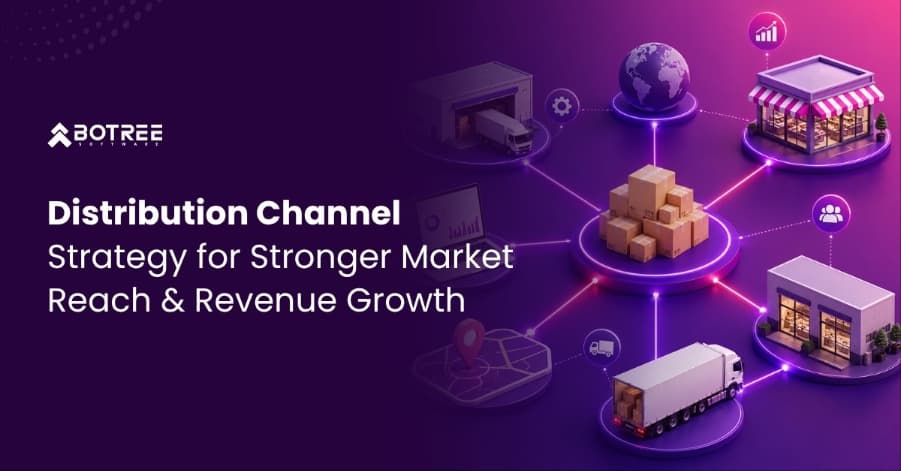
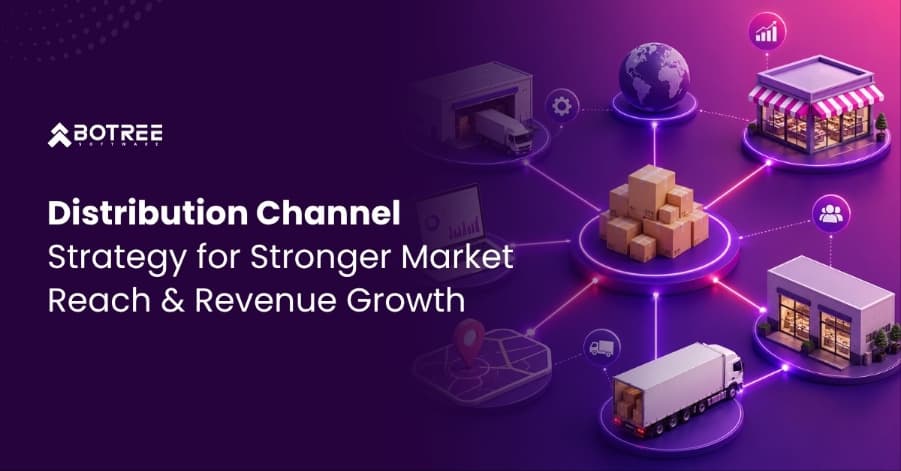
The distribution channel refers to the route taken by the product from the manufacturer to the customer. The participants involved in the movement of products through the supply chain to ensure that the products are available at the right places and the right times include individuals, businesses, and process-related entities.
For instance, the typical path that products take in the FMCG industry involves the following route: manufacturer → C&F agent → distributor → retailer → consumer. At each point of the process mentioned above, companies can get their brands into thousands of retail stores while guaranteeing product availability in diverse markets.
Besides moving products, a good distribution channel enables organizations to enhance market coverage, increase sales figures through secondary selling, reduce stock outs, improve inventory management, and build good relationships with channel participants. In light of changing consumer needs, selecting the right distribution channel is a critical factor for business growth.
FMCG brands use multiple distribution channels to reach different customer segments and markets. Each channel serves a unique purpose and contributes differently to market reach, retailer engagement, and revenue growth.
| Distribution Channel | What It Does | Why It Matters |
|---|---|---|
| General Trade (GT) | Delivers products through distributors to kirana stores, grocery shops, chemists, and independent retailers. | Covers the largest retail network in India and drives the majority of FMCG sales. |
| Modern Trade (MT) | Supplies organized retail formats such as supermarkets, hypermarkets, and retail chains. | Improves brand visibility, supports large-format retail, and enables structured promotions. |
| Wholesale | Supplies products in bulk to wholesalers, who then serve smaller retailers. | Helps brands expand reach in Tier 2, Tier 3, and rural markets where direct coverage is limited. |
| HoReCa | Supplies products to hotels, restaurants, cafés, caterers, and institutional buyers. | Creates bulk sales opportunities and strengthens presence in the food service industry. |
| eB2B & Retailer Apps | Enables retailers to place orders digitally through mobile apps or web portals. | Improves retailer convenience, increases order frequency, and provides better secondary sales visibility. |
| Quick Commerce | Delivers products through instant delivery platforms using dark stores and micro-fulfillment centers. | Helps brands meet rising consumer demand for ultra-fast delivery and impulse purchases. |
| Direct-to-Consumer (D2C) | Allows brands to sell directly through their own website, app, or exclusive stores. | Gives brands greater control over customer experience, pricing, and first-party consumer data. |
Managing a distribution channel at scale is far more complex than simply moving products from manufacturers to retailers. As businesses expand across geographies, channels, and distributor networks, they often face operational challenges that directly impact product availability, sales performance, and customer satisfaction.
Building an effective distribution channel strategy is not just about choosing where to sell. It is about ensuring products are consistently available, distributors perform efficiently, and customers can access your products whenever demand arises. The most successful FMCG brands build their distribution strategy around these five priorities.
The type of product may perform better on one type of channel compared to another. Whereas volume is achieved by General Trade, brand visibility can be enhanced through Modern Trade, ordering from the retailer can be improved through eB2B, and impulse sales can be made through Quick Commerce.
FMCGs rely largely on distributors to sell their products. Regular reviews of distributor performance, trade schemes that are transparent, visibility of inventory and joint planning help in improving channel performance.
Expanding is not about having many distributors but having enough outlets that have the business. Therefore, businesses need to discover the unserved areas, recruit retailers who can perform better, and develop sales coverage in the field.
Businesses require visibility in inventory, secondary sales, order fulfillment, and demand of retailer throughout the chain of distribution, for them to be able to act faster to changing market conditions and to minimize stockouts and improve replenishment.
A successful distribution strategy evolves with the market. Monitoring KPIs such as ss, fill rates, distributor productivity, secondary sales, channel profitability, and retailer service levels helps businesses identify gaps and continuously improve distribution performance.
AI is transforming distribution channel management by helping businesses make faster, smarter decisions across distributors, retailers, territories, and channels. Instead of reacting to market changes after they happen, AI enables brands to predict demand, optimize channel performance, and allocate resources where they deliver the greatest impact.
AI looks at secondary sales analysis, outlet performance, market potential, and channel trends in order to determine how an additional investment would help yield the best possible results for the brand. The company can target its investments towards the territories with high growth, to extend distribution channels, and to invest in trade budgets according to actual needs and opportunities.
AI constantly considers factors such as outlet density, buying frequency, travel time, and potential sales in order to optimize territories and field operations. It helps businesses to increase their outlet coverage, to enhance field productivity, and to invest their efforts in high-potential areas.
Using General Trade, Modern Trade, eB2B, Van Sales, and Quick Commerce data, AI detects changes in consumer demands and helps businesses to adjust their inventory allocations, replenishment, and trade promotion programs even before these changes are visible in sales data.
AI analyzes distributor performance using secondary sales data, inventory movements, fill rates, service levels, and trends to determine the distributors that need immediate attention and improvement.
Distribution channel strategy is often viewed as a logistics function, but its impact extends far beyond product movement. The channels a business chooses directly influence market reach, revenue potential, profitability, and long-term competitive advantage. A strong distribution strategy helps businesses:
The most successful FMCG brands don’t see distribution as simply moving products—they see it as a strategic growth engine that directly influences revenue, market share, and long-term business performance.
Botree AI-powered route-to-market platform assists FMCG and CPG companies in implementing their route-to-market strategies by bringing together distributors, retailers, field salesperson, and business managers onto one platform. Through Botree DMS, retail ordering process, field execution, and intelligent analytics, businesses can get the visibility and control that is necessary for better market penetration and sustainable growth.
The contemporary approach towards designing a distribution channel system goes beyond simply transporting goods from manufacturers to consumers; it entails establishing a network of interconnected systems that would enable sustainable growth of businesses. A proper combination of appropriate distribution channels with effective distributor management, extensive outlet presence, secondary sales visibility, and field execution optimization will facilitate improved product availability and help capitalize on potential revenue sources.
With the ongoing developments in FMCG distribution including eB2B, Quick Commerce, and AI, as well as increasing requirements of retailers, businesses should focus on utilizing the power of connected distribution technologies to enhance their competitive advantage.

Marketing Associate
Meet Christina Evangelin Ebinezer, our dynamic marketing associate at Botree Software. With a background in HR and marketing, and prior experience as a content writer, Christina brings a sharp eye for storytelling and a knack for crafting engaging blogs and marketing content. She’s passionate about turning ideas into words that drive impact. Outside of work, Christina finds joy behind the piano keys or the wheel—whether she’s playing a soulful tune or cruising down open roads.
What is channel management in FMCG?
What is the difference between a distribution channel and a distribution network?
How do businesses measure distribution channel performance?
What is distribution channel optimization?
How does technology improve distribution management?
What should businesses look for in distribution management software?
Stay updated with the latest trends and insights.