
Christina Evangelin Ebinezer
Marketing Associate




In FMCG, having a great product isn’t enough.
What really moves the needle? Distribution.
Plenty of brands struggle not because customers don’t want their product, but because they’re not showing up in the right places. Choosing the right distribution channel isn’t just a sales decision—it’s a growth strategy. And one big question looms for both new and established brands: Should you lean into General Trade or Modern Trade?
It’s not always a clear-cut choice.
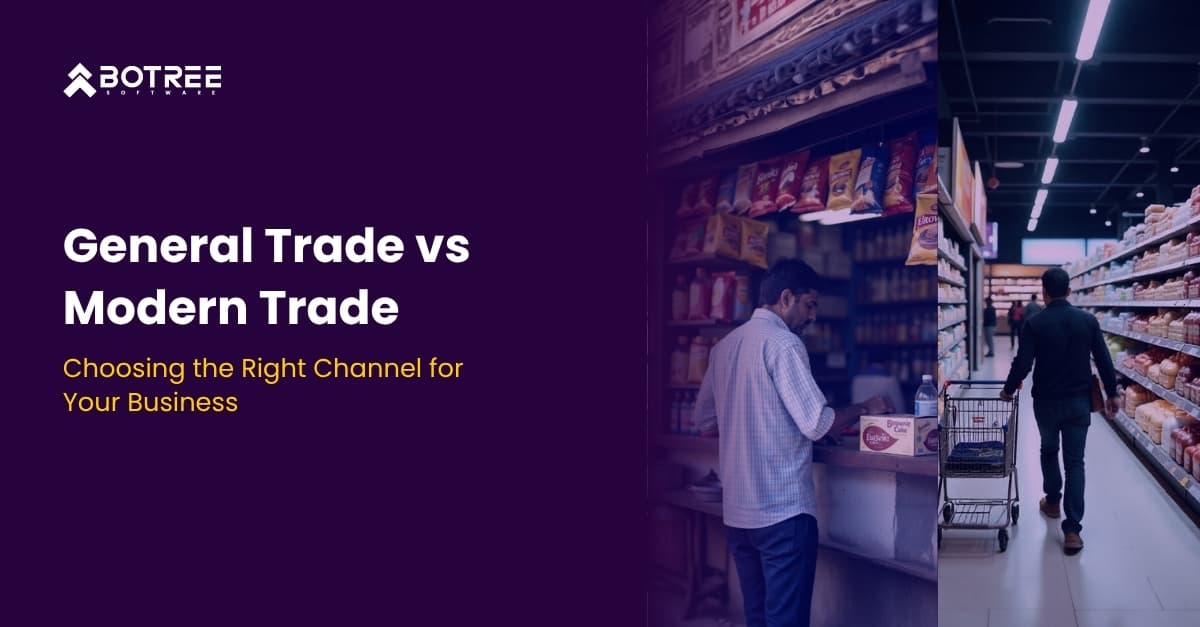
General Trade refers to the traditional retail setup—local kirana stores, and smaller independent outlets tucked into neighbourhoods. Modern Trade, on the other hand, is about large-format, organized retail outlets like supermarkets, and hypermarkets with standardized layouts and centralized purchasing.
Here’s the thing: many brands make the mistake of treating General Trade and Modern Trade as interchangeable. They’re not.
Each operates by its own rules. What is successful in general trade might not succeed in modern trade and the opposite can also be true. That’s why choosing between the two means taking a close look at your product, your pricing, your packaging—and whether they fit the way each channel operates and the way its customers behave.
In this blog, we’ll break down the key differences between General Trade and Modern Trade—and help you figure out which model makes more sense for your brand.
Choosing the right retail channel is a crucial choice for any FMCG company looking to grow. General Trade and Modern Trade both act as avenues to access consumers, yet they operate through significantly distinct frameworks, each presenting its own advantages, challenges, and strategic factors.
Here’s a comparative analysis of how each channel can help your business objectives:
| Aspect | Modern Trade | General Trade |
| Definition | Organized retail with large-format stores and national chains. | Traditional network of wholesalers, kirana stores, and local retailers. |
| Reach | Strong in urban and semi-urban clusters. | Extensive coverage in rural and remote areas. |
| Brand Control | High control over in-store visibility, promotions, and placement. | Limited control due to fragmented networks. |
| Data Availability | Real-time sales and inventory data via POS systems. | Low visibility into actual sales performance. |
| Competition | High competition for shelf space and consumer attention. | Fragmented but competitive at the local level. |
| Margins | Lower due to promotional costs and trade discounts. | Variable margins, affected by retailer-level negotiations. |
| Product Volume | High volumes per store; better suited for fast-moving SKUs. | Low to moderate volumes, spread across many outlets. |
| Requirements | Demands standardised packaging, pricing, and quality compliance. | Easier entry with more flexible product standards. |
| Personalization | Centralized operations limit regional customisation. | Allows for regional adaptation and consumer preferences. |
| Feedback Loop | Indirect and often delayed through retail partners. | Direct, immediate feedback from store owners and shoppers. |
| Market Penetration | Ideal for scaling in metro and Tier-1/Tier-2 cities. | Best for last-mile reach in underserved territories. |
| Risk Dependence | Heavily reliant on few large retail chains. | Risk spread across a wide retailer base. |
| Adaptability | Quickly adapt to market data and emerging trends. | Slower to adapt, but strong on traditional buying patterns. |
Choosing the right distribution channel isn’t just about where your product can go—it’s about where it truly fits.
In FMCG, success often comes down to how well your product matches the realities of the channel. If there’s a disconnect—say, the packaging doesn’t suit shelf space, or pricing doesn’t align with shopper expectations—you risk slow sales, high returns, and missed opportunities.
That’s why understanding channel fit is so important. It’s not just about launching successfully—it’s about scaling profitably.
General Trade and Modern Trade each cater to different buying behaviors, price expectations, and supply chain rhythms. A product that flies off the shelves in a supermarket might sit untouched in a kirana store and the reverse can be just as true.
Impulse Buying vs. Planned Buying
General Trade thrives on fast-moving, low-cost items like snacks, beverages, and daily essentials. Customers stop where the purchases are quick and habitual, and relationships with store owners play a big role in driving repeat sales.
Modern Trade on the other hand, is built for planned, basket-style shopping. Perfect for family sizes, premium items, or multiple purchase deals. Customers spend a longer time in-store, evaluate choices, and react to promotions in the aisles.
Packaging and Pricing Awareness
In General Trade, flexibility is key. Smaller pack sizes, single units, and localized pricing works best. It’s all about accessibility and affordability for daily shoppers.
Modern Trade demands more attention-grabbing packaging, clear barcodes, and eye-catching designs. Pricing usually needs to align with broader MRP strategies and national-level promotions.
Creativity and High-End Offerings
General Trade is cautious with new or premium products—unless there’s strong brand pull or incentives for the retailer, unfamiliar items might not even get stocked.
Modern Trade is where innovation shines. Health-conscious, premium, or experimental SKUs often perform well here, where shopper base that’s more open to trying new things.
Operational competencies
General Trade relies heavily on distributor networks, route efficiency, and strong local relationships. It’s fast, widespread, and deeply embedded in the community.
Modern Trade is more structured. It requires rock-solid supply chains, reliable fill rates, and systems that support Electronic Data Interchange (EDI) and centralized purchasing.
If you’re building a brand aimed at the everyday shopper, General Trade still offers something no other channel can match: sheer reach and reliability.
Despite all the attention Modern Trade gets, General Trade remains the dominant force in FMCG distribution—especially for affordable, fast-moving products. We’re talking about the daily staples: sachet shampoos, ₹1 snacks, basic personal care items, OTC meds. The stuff people pick up without thinking twice.
One of the most iconic general trade products is the ₹1 pack of Halls. You’ll find it at almost every small shop, paan kiosk, or general store across India. Why? It’s instantly recognizable, priced for impulse, and moves quickly.
Retailers love it because it sells fast, generates daily cash flow, and doesn’t lock up much working capital.
In short? General Trade is still unbeatable when it comes to distributing low-cost, high-velocity products at scale. It’s not just a channel—it’s a foundation.
If General Trade is all about reach, Modern Trade (MT) is about refinement.
For premium FMCG brands, high-margin products, or bulk-pack formats, Modern Trade offers a more structured, brand-enhancing environment. It’s not just about putting products on shelves—it’s about creating the right customer experience, building trust, and telling a cohesive brand story.
Whether you’re launching something new, growing a premium line, or nudging customers toward bigger basket sizes, Modern Trade gives you the setting and the tools to make it happen.
Unlike General Trade where Halls is sold as a ₹1 single unit, in Modern Trade, Halls is available in value multipacks or bulk packaging—often displayed on eye-level shelves or near checkout counters. These larger packs cater to shoppers looking for value, convenience, and brand trust in organized retail environments. The packaging, size, and price point are all tailored to urban consumer habits and high basket-value preferences.
In short, Modern Trade is more than just organized retail—it’s a channel where brand presentation, shopper experience, and sales strategy all align. For premium and high-margin items, it offers a platform built for performance.
Botree Software ecosystem serves over 60 blue‑chip brands, supports 93,000 distributors, 33,000 active sales team, and connects to 5 million retail stores—enabling seamless channel management and real-time decision-making across general trade and modern trade.
As FMCG brands scale and diversify, technology isn’t just helpful—it’s essential. Choosing the right channel and managing it effectively—whether it’s General Trade or Modern Trade —requires the right digital backbone.
Distribution Management Systems (DMS) and Sales Force Automation (SFA) tools have become the go-to enablers for brands looking to improve efficiency, tailor their strategies by channel, and make smarter, data-backed decisions. With a unified tech ecosystem, managing both general trade and modern trade becomes not just possible—but highly profitable.
General trade relies on fast movement and consistent stock. A solid DMS helps brands track inventory across distributors and outlets in real time—so you’re not overstocked in one region and sold out in another. That’s key for high-volume, low-cost SKUs.
With features like automated billing, smart routing, and live order capture, delivery cycles are shorter and more efficient. Distributors can digitize their entire secondary sales process, leading to faster replenishment—especially in remote or semi-urban areas.
Many DMS platforms are mobile-first, meaning even in low-connectivity areas, distributors can check product catalogs, apply promotions, and track targets from their phones. It’s seamless, scalable, and removes a lot of manual headaches.
In Modern Trade, it’s all about visibility and compliance. DMS helps track planograms, monitor shelf share, and ensure premium SKUs are consistently and correctly displayed. Doing this manually across dozens—or hundreds of stores? Not sustainable.
Modern Trade retailers provide detailed sales data. When plugged into your DMS, that data becomes gold—revealing what SKUs are flying, what’s lagging, and how performance varies by region or format. Brands can tweak pricing, packaging, and placement accordingly.
For HMD Global, operational efficiency isn’t just a goal—it’s a growth driver. With Botree DMS at the core of their distribution ecosystem, the company has been able to streamline logistics, reduce payout timelines, and strengthen execution across key functions.
“Botree DMS serves as the lifeline for HMD Global, ensuring smooth operations across multiple functions. It has significantly reduced our payout timelines, streamlined logistics, and played a vital role in our business’s growth.”
— Vineet Chadha, Head of India Sales Analytics, HMD Global
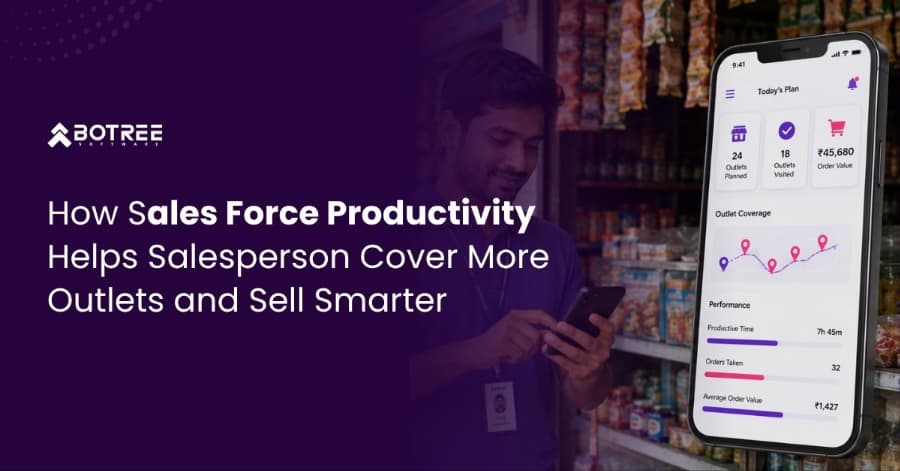
Sales Force Automation complements DMS by enabling your field teams to act on strategy—right on the ground. Here’s how:
Tech tools like DMS and SFA aren’t just support systems—they’re what makes consistent, scalable multi-channel growth possible.
In today’s FMCG landscape, the right technology doesn’t just support your distribution strategy—it shapes it. Here’s how:
With tools like DMS and SFA, brands can play to each channel’s strengths. Want to push ₹1 sachets in General Trade? Use beat-level insights to target the right outlets. Looking to drive premium SKUs in Modern Trade? Lean on store-level performance data to optimize promotions and placement.
Automation removes the lag. Whether it’s gearing up for festive demand in general trade or launching a flash sale in modern trade, you can move fast—and stay ahead of the competition.
When you have full visibility from primary stock movement to secondary sales, you can plan better, spend more strategically, and execute with confidence—no matter the channel.
Tech partners like Botree Software offer integrated platforms that bring your general trade and modern trade operations together under one roof. That means real-time data, faster decisions, and a distribution model that scales with your growth.
In today’s fragmented and competitive retail environment, smart tech isn’t a “nice to have”—it’s the foundation of a winning channel strategy.
Choosing the right retail channel really comes down to two things: what you’re selling and who you’re selling to. The right fit between product traits and shopper behavior can make all the difference in how quickly and profitably you scale.
General Trade:
Best suited for small, affordable items—like ₹1 candies, sachets, or trial-size packs. These products align with the day-to-day buying habits of value-conscious consumers and come with low inventory risk for kirana store owners.
Modern Trade:
Made for larger packs, value combos, and premium offerings. Think multi-packs or family-size formats. These products benefit from structured displays and shelf visibility—perfect for increasing average transaction value.
General Trade:
Caters to a wide base of rural, semi-urban, and budget-focused urban shoppers. In this setting, essential products that are quick to buy and quicker to restock tend to perform best.
Modern Trade:
Targets urban, tech-savvy consumers who care about quality, brand experience, and shopping in well-organized environments. These shoppers are more open to trying premium products, signing up for loyalty programs, and buying in bulk.
| Criterion | General Trade (GT) | Modern Trade (MT) |
| Product Size & Price | Small, low-cost, impulse SKUs | Larger, premium, bundle, value formats |
| Ideal Audience | Rural/semi-urban, price-conscious shoppers | Urban, brand-conscious, tech-savvy consumers |
| Retail Format | Kirana stores, local mom‑and‑pop outlets | Supermarkets, hypermarkets, organized chains |
| Buying Behavior | Frequent, small-ticket purchases | Planned, bulk, or premium-item buys |
Deciding between General Trade and Modern Trade isn’t just a matter of what feels right—it’s about matching your product to the realities of the market.
If you’re selling affordable, fast-moving SKUs, General Trade offers unmatched reach, quick movement, and strong local relationships. On the other hand, if your focus is on premium or high-margin products, Modern Trade gives you visibility, curated shelf space, and a better customer experience.
The smartest brands don’t pick one and stick with it blindly. They segment, test, and adapt. A great channel strategy comes from understanding your product’s stage in the lifecycle, how your customers shop, and where they’re shopping.
At the end of the day, it’s not General Trade vs Modern Trade—it’s about knowing where your product truly performs and leaning into that with clarity and intent.

Marketing Associate
Meet Christina Evangelin Ebinezer, our dynamic marketing associate at Botree Software. With a background in HR and marketing, and prior experience as a content writer, Christina brings a sharp eye for storytelling and a knack for crafting engaging blogs and marketing content. She’s passionate about turning ideas into words that drive impact. Outside of work, Christina finds joy behind the piano keys or the wheel—whether she’s playing a soulful tune or cruising down open roads.



Stay updated with the latest trends and insights.