
Christina Evangelin Ebinezer
Marketing Associate



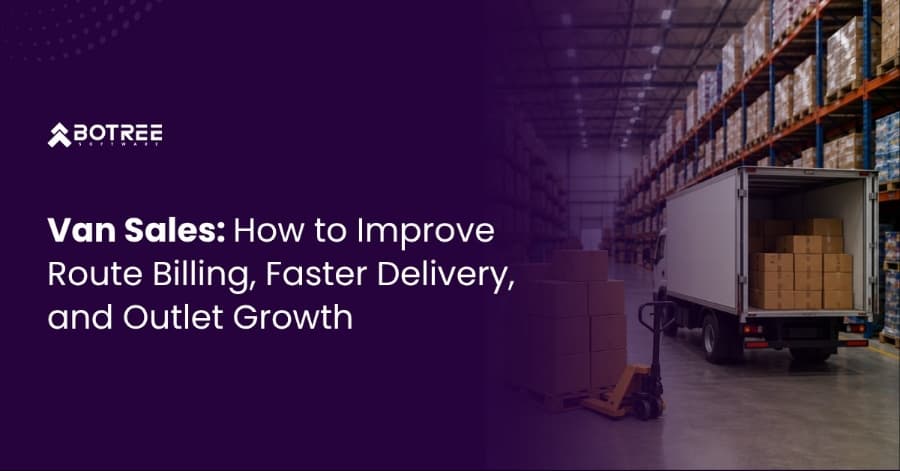
At 7 AM, a van sets out from a distributor’s warehouse carrying drinks, snacks, and toiletries. By 6 PM, it has served 40 outlets, billed all of them instantly, received payments, and come back with reconciled inventory. Orders received yesterday, not delivered tomorrow – sell and deliver in one shot!
That is van sales. And for FMCG brands distributing through general trade in India, that is one of the most crucial and most underestimated – elements of their route-to-market.
For product categories where freshness is essential, outlets require replenishment frequently, and retailers place orders at the point of sale, van sales is not an option to pre-sales route. In many cases, it is the quicker and better option for driving outlet services and revenue growth.
However, scaled up, van sales becomes one of the most operationally challenging segments of FMCG distribution. Manual billing mistakes, stock pilferage, cash leakages, inefficient routing, and lack of secondary sales visibility become the reasons behind major revenue and margin losses – silently and consistently.
This blog covers the ins and outs of van sales operations, their challenges, and the steps required to transform them into a lever for outlet growth.
Van Sales in FMCG is an approach wherein a salesperson will stock up the items he needs to sell, go to retail shops, place an order there, create an invoice, deliver the item immediately, and receive payment all at once.
Van Sales is different from the old pre-sales approach because in Van Sales, not only is the order placed but everything else in the entire sales cycle takes place within the outlet itself.
Simply put, Van Sales satisfies this crucial business requirement:
“How can products be sold and delivered to the retailers in a single visit?”
Here is an illustration of Van Sales: A beverage distributor will stock his van with fast-moving SKU in the morning. And while going around to Kirana shops in the daytime, he will sell the product, invoice the item, deliver the item, and collect payments all at once.
India’s FMCG distribution network is unlike most developed markets. With millions of retail outlets spread across urban, semi-urban, and rural locations, brands need a distribution model that delivers products quickly while serving retailers with varying order sizes and purchasing patterns. This is where Van Sales continues to play a critical role.
General trade continues to be a source for most of the FMCG sales in India. Small retailers like Kirana stores may demand replenishment on an instant basis rather than through planned deliveries; van selling emerges as one of the quickest ways to do that.
In many small towns or rural markets, distributor infrastructure and order frequency is less. Van selling can help brands enhance outlet coverage, speed up deliveries and serve retailers effectively without depending on distinct order and delivery process.
Foods and beverages, bakery items, frozen foods, dairy and other high frequency products need quick replenishments. Van selling allows brands to make inventory available to retailers immediately.
Immediate collection of money after delivery of the products is common in general trade markets. Van selling can allow distributors to streamline their billing, delivery and collections processes.
The demand during festive season, summers, regional events, and promotions may vary from time to time. The van sales business that is digitally managed enables firms to react to such changes in the market demand better than other traditional means of deliveries.
Although van sales help brands increase availability of products and delivery speed, running a large-scale van sales process has many challenges which should be managed efficiently. Otherwise, these problems may negatively affect sales performance, profitability, and even customer service.
A purpose-built van sales automation platform closes every one of those operational gaps — and adds the intelligence layer that turns a van route into a data-generating revenue engine.
The use of mobile billing software enables the sales team to create an invoice immediately in a GST-compliant way using predefined price, trade deals, and taxation policy. Thus, errors during the billing process are minimized, and transactions are made faster and more convenient for retailers.
Real-time inventory management allows businesses to have full insight into inventory changes that happen all day long. Sales and returns and stock adjustments are registered automatically, which helps to minimize inventory discrepancies, avoid stockouts, and keep the van inventory up to date.
Smart route planning and beat planning helps sales teams cover more outlets while reducing travel time and fuel costs. By prioritizing high-potential outlets and optimizing daily routes, businesses can improve outlet coverage, increase productivity, and serve retailers more consistently.
Van sales solutions enable the sales reps to register cash, cheque, UPI, and digital payments through the mobile app itself. It streamlines the process of collection, minimizes errors, improves cash flow, and also gives managers live visibility of payments made.
The trade promotions and pricing schemes are automatically applied while the billing is being done, ensuring that the right discounts and promotions are available to all eligible retailers. It ensures fewer pricing conflicts, saves on manual computations, and makes trade promotions more effective.
It is observed that the vans usually operate in those areas where there is less connectivity available. Offline support enables the sales team to work seamlessly even in such areas without having to face any issues while invoicing, managing stock, registering collection, or delivering products.
Live dashboards provide complete visibility into van sales performance, inventory levels, route execution, collections, and field productivity. These insights help managers identify operational gaps, monitor performance, and make faster decisions to improve overall sales execution.
Both Van Sales and Pre-Sales are widely used in FMCG distribution, but they serve different business needs. The right approach depends on your product category, outlet type, delivery model, and market requirements.
| Criteria | Van Sales | Pre-Sales |
|---|---|---|
| Order & Delivery | Completed during the same outlet visit | Orders are booked first and delivered later |
| Best Suited For | Fast-moving, perishable, and impulse purchase products | Planned purchases and scheduled deliveries |
| Target Outlets | Kirana stores, rural outlets, small retailers | Modern trade, wholesalers, and large retailers |
| Inventory Location | Stock carried in the sales van | Stock stored at the warehouse or distributor |
| Billing | Instant billing at the outlet | Billing during or after delivery |
| Payment Collection | Usually collected during the same visit | Credit or payment collected later |
| Secondary Sales Visibility | Captured immediately | Depends on delivery confirmation and reporting |
| Field Productivity | Higher, as selling and delivery happen together | Lower, as order booking and delivery require separate visits |
Van sales automation does more than digitize billing and streamline operations. It helps FMCG brands and distributors improve outlet coverage, increase secondary sales, strengthen field execution, and make faster business decisions through real-time visibility across the distribution network.
AI is making van sales smarter by helping businesses optimize routes, improve order quality, predict demand, and strengthen field execution. Instead of relying on manual planning and experience alone, AI enables data-driven decisions throughout the van sales journey.
AI studies the location of outlets, traffic conditions, visit frequency, sales data, and route importance to come up with the most efficient routes for a day. This allows the sales teams to serve more outlets while saving on time and improving route productivity.
Artificial intelligence suggests the appropriate SKUs and order quantities considering outlet sales history, current inventory in vans, seasonal demands, and active trade schemes. This way, sales representatives can improve basket sizes, optimize range selling, and achieve better secondary sales.
By continuously analysing van sales, secondary sales, inventory levels, and demand trends, AI can identify potential stock shortages and generate replenishment recommendations before they impact product availability.
Through continuous monitoring of sales, collections, inventories, and route performances, artificial intelligence can detect anomalies, under-performing routes, decreasing outlet sales, and even collections risks.
Botree DMS allows FMCG & CPG brands to optimize van sales by integrating route planning, van inventory management, invoicing, delivery, collections, and secondary sales on a single system. Ready stock distribution system designed to help distributors increase field efficiency, reach more outlets, and have real-time visibility of all the van operations.
Using Botree DMS, the salespeople will be able to create GST compliant invoices, auto apply trade schemes, manage van inventory in real time, and record cash/cheque/digital collections from the mobile application. The offline functionality will ensure uninterrupted operations in the absence of internet connections, while all the transactions will be automatically synced once the connection will be back online.
Botree DMS offers full visibility of secondary sales, van stock movement, route performance, and sales at outlet level via live dashboard and analytics. All this functionality, combined with AI-powered Suggested Order Quantity (SOQ), route optimization, and real-time reporting, will help brands optimize product availability, avoid stock discrepancies, increase field efficiency, and make informed decisions.
Van Sales remains one of the most efficient distribution strategies for FMCG and CPG brands that require quick delivery, increased product availability, and secondary sales. Through a process whereby order booking, billing, delivery, and collections are completed within the same visit, companies are able to become responsive to market demands while maintaining stronger relations with retailers.
Nevertheless, as the distribution networks grow, managing the van sales manually becomes harder. Lack of visibility on inventory, billing issues, inefficient routes, delayed collections, and lack of secondary sales visibility may all have an impact on the efficiency of the distribution and sales process.
Modern solutions for Van Sales help solve these challenges by making field operations digital, offering real-time visibility, and facilitating data-driven decisions. Together with the power of AI, route optimization, and Distributor Management System (DMS), it is possible to increase outlet coverage, optimize inventory, improve field productivity, and provide better customer service.
The brands that succeed in today’s market are those who manage each of their van routes in a faster, smarter, and more efficient way.

Marketing Associate
Meet Christina Evangelin Ebinezer, our dynamic marketing associate at Botree Software. With a background in HR and marketing, and prior experience as a content writer, Christina brings a sharp eye for storytelling and a knack for crafting engaging blogs and marketing content. She’s passionate about turning ideas into words that drive impact. Outside of work, Christina finds joy behind the piano keys or the wheel—whether she’s playing a soulful tune or cruising down open roads.
Which industries benefit the most from Van Sales?
What is Ready Stock Distribution?
How do businesses measure Van Sales performance?
How can businesses reduce cash leakage in Van Sales?
Why is Offline Van Sales Software important?
How does Van Sales support Direct Store Delivery (DSD)?
What is the role of GPS tracking in Van Sales?
Can Van Sales Software integrate with ERP and Distributor Management Systems?
How does Van Sales improve retailer satisfaction?
What should businesses consider before implementing a Van Sales solution?
Stay updated with the latest trends and insights.