
Christina Evangelin Ebinezer
Marketing Associate



Field teams create huge amounts of data for sales organizations today, yet many companies cannot answer some basic questions: Do they meet their sales targets? Do they really conduct all the outlet visits they plan? Which territories perform poorly? Where do they miss out on sales opportunities?
With lack of real-time visibility into their field operations, companies continue using manual reporting, spreadsheets, and end-of-day reports to get answers, which slows down decision-making and does not allow them to drive performance improvements. By the time managers see missed targets and low productivity, sales opportunities were missed.
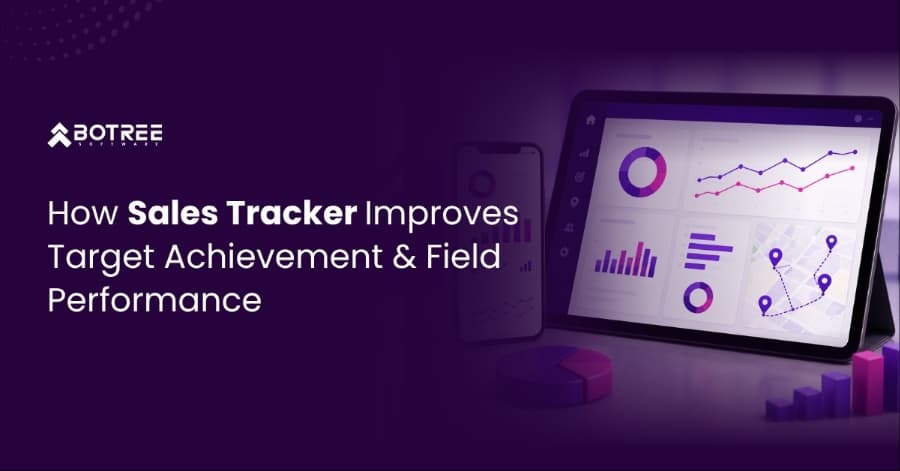
A modern Sales Tracker eliminates these problems by providing real-time visibility into sales targets, outlet visits, orders, beat compliance, and field performance. Rather than just recording where salesperson go, it allows businesses to track what results are achieved during every single sales visit to help managers coach field teams better, increase productivity, and reach sales targets.
In this blog post, we will discover what a Sales Tracker is, why it has become an essential tool in modern field sales, how to develop a sales tracking strategy, and how AI is allowing businesses to achieve their sales targets better.
Sales Tracker is a field sales management software that gives you visibility on sales activity, target attainment, visits to outlets, order booking, and performance of the field team. It is used by FMCG and CPG companies to know how well their sales team performs their daily tasks, including delivering their products to the required outlets.
While sales reporting usually requires manual inputs and updates throughout the day or after work is done, with the help of the Sales Tracker, all the information about what your field team is doing gets collected in real time.
The basic elements tracked by a sales tracker include:
A sales tracker is not just a GPS solution to determine the geographical location of your representatives. Their location is just one of the inputs. The output is what really counts in business terms – is the story that a sales tracker tells based on all these inputs.
A modern Sales Tracker closes these gaps by providing real-time visibility into targets, field activities, outlet visits, and sales performance. Instead of reacting to missed targets, businesses can monitor progress daily, coach teams proactively, and make faster decisions that improve field performance and sales results.
A contemporary sales tracker solves the above challenge through giving the firm visibility of the targets, field activity, outlet visit, and sales performance. This will enable the firms to take appropriate action without waiting for failure to achieve sales targets.
A Sales Tracker is not only meant to track field activities; rather, it should be capable of measuring the metrics which have a direct impact on reaching targets and improving the productivity of sales. Through real-time tracking of appropriate metrics, businesses will be able to pinpoint any performance gaps and make fast decisions.
| KPI | Why It Matters |
|---|---|
| Target vs Achievement | Tracks daily, weekly, and monthly sales performance against assigned targets, helping managers identify gaps early and take corrective action before targets are missed. |
| Beat Adherence & Outlet Coverage | Measures whether field teams are visiting the right outlets at the planned frequency, ensuring complete territory coverage and reducing missed sales opportunities. |
| Productive Call Rate | Shows the percentage of outlet visits that result in an order, helping businesses measure the quality of field execution rather than just the number of visits completed. |
| Lines per Call (LPC) | Tracks the average number of SKUs sold during each outlet visit, helping businesses evaluate range selling effectiveness and improve product assortment. |
| New Outlet Addition | Monitors the number of new retail outlets added by each salesperson, supporting market expansion and long-term sales growth. |
| Scheme Communication & Utilization | Measures how effectively trade promotions are communicated and adopted by retailers, helping maximize scheme participation and improve trade promotion ROI. |
| Order Value & Secondary Sales | Tracks sales value and secondary sales trends across outlets and territories, providing better visibility into market demand and business performance. |
| Strike Rate | Measures the percentage of successful sales conversions from total outlet visits, helping managers identify coaching opportunities and improve field productivity. |
A modern Sales Tracker brings these KPIs together into a single, real-time dashboard, enabling businesses to move beyond activity tracking and focus on improving sales performance, target achievement, and revenue growth.
Sales tracker is not just about tracking sales activities but also improving target attainment and field performance through real-time visibility in sales execution, field activities, and performance metrics. Managers will no longer have to wait until the end of the month to find out what the problem is but will be able to keep track on a daily basis and intervene when necessary.
Managers get an instant view of sales targets, sales outlet visits, beat adherence, productive calls, order value, and secondary sales via dashboards, which help detect low-performing territories and sales people in time to make timely decisions and implement interventions.
With key performance indicators such as strike rate, productive call rate, coverage of sales outlets, order value, and achievement of sales goals, coaching becomes much easier because field managers can base their coaching on actual performance and not on their own assumptions.
If sales performance starts deteriorating, a business can shift its focus to priority outlets, better range selling, second chances, or increased outlet coverage in order to turn the situation around before the end of the month. Consistent tracking enables businesses to fix problems in time.
The Sales Tracker monitors sales outlet visits, orders, beat adherence, new outlets added, and sales achievements based on field data. It increases accountability for field teams while making sure that performance evaluation, incentive calculation, and reporting remain transparent.
Sales tracking allows companies to see how their top performers differ from others when it comes to visit planning, productive calls, range selling, and order generation. In turn, these differences can be communicated within the company for increased field efficiency and consistent sales.
Target tracking every day, dashboards with up-to-date information, and performance leaderboards give the opportunity to salesperson to see how they perform during the month and motivate them to compete and work productively.
Sales tracking has been taken to a new level through the application of artificial intelligence. Unlike before when sales tracking was only a reporting mechanism that showed what had already taken place, AI allows organizations to be able to make decisions on future performance.
Botree SFA enables FMCG, CPG, and FMCD companies to better achieve their targets and execute their fields by bringing visibility into sales execution, outlet visitations, beat coverage, and secondary sales on one integrated platform. Field managers can track the achievement of individual, territory, and SKU level targets in real-time using live dashboards for better decision-making and taking necessary actions. GPS-enabled beat coverage and outlet visitation tracking ensures field team adheres to their planned beats by automatically tracking those beats and identifying non-covered outlets. Analytics in-built in the solution such as productive call rate, strike rate, range selling, order value, and secondary sales help field managers make necessary interventions and coaching.
The solution provides an insight into field activities due to its native integration with Botree DMS by connecting field activities to distributors and secondary sales information. Using Botree Product Recommender with SOQ, the right set of products and quantities is recommended for every outlet depending on purchase history, inventory position, and demand pattern, thus optimizing order value and range selling. Alongside, Botree Insights provide businesses with AI-powered dashboards, territory analytics, rep scorecards, and performance trends.
Sales Tracker is no longer a simple means to track field activities; it has become an essential part of sales execution. With the help of a Sales Tracker, businesses can get real-time insights into targets, outlet visits, orders, and field activities, enabling them to act fast and take steps that will enhance their sales execution process.
When it comes to FMCG, CPG, and FMCD companies that manage large field sales teams, apart from setting target numbers, there is a need for them to track their targets and optimize the field process continuously. Companies that rely on delayed data and manual review of data will usually be slow in action and will act after the opportunity to perform better has been missed.

Marketing Associate
Meet Christina Evangelin Ebinezer, our dynamic marketing associate at Botree Software. With a background in HR and marketing, and prior experience as a content writer, Christina brings a sharp eye for storytelling and a knack for crafting engaging blogs and marketing content. She’s passionate about turning ideas into words that drive impact. Outside of work, Christina finds joy behind the piano keys or the wheel—whether she’s playing a soulful tune or cruising down open roads.
What is the difference between a Sales Tracker and CRM software?
What are the most important sales KPIs to monitor?
How does GPS sales tracking improve field sales management?
What is the difference between sales tracking and sales reporting?
What features should businesses look for in sales tracking software?
How does sales tracking improve sales forecasting?


Stay updated with the latest trends and insights.