Understanding Distributor Management Systems
In today’s fast-paced business landscape, traditional methods of managing distribution—such as manual tracking through spreadsheets, paper-based processes, and fragmented communication channels—have become inefficient and tedious. These outdated practices are prone to errors, slow down operations, and limit the ability to scale effectively. As businesses grow and distribution networks expand, these manual methods can no longer keep up with the demand for real-time data, quick decision-making, and seamless coordination. This is where a modern Distributor Management System (DMS) comes in, simplifying complex distribution tasks with automation and helping your business grow more efficiently.
A Distributor Management System (DMS) is a software solution designed to manage and optimize the distribution operations of businesses. It acts as a centralized platform for monitoring and controlling various aspects of the distribution network, from inventory to billing to order fulfillment, ensuring smooth and efficient movement of products from manufacturers or suppliers to retailers and end consumers.
For those seeking to maximize efficiency and expand market presence exploring the benefits of implementing the right DMS is the solution. A robust DMS not only helps you track your product distribution but also provides your team with the right information including scheme benefits at the right time, and stock availability.Whether you’re running a small business or managing a large-scale operation, a robust DMS becomes an integral part of businesses to increase operational efficiency, help optimize business strategy, and drive sales growth.
In fact, companies that adopt DMS solutions report a 25% reduction in operational costs and a 30% improvement in order accuracy, according to a recent study by Gartner. Whether you’re running a small business or managing a large-scale operation, a robust DMS is a no-brainer for increasing efficiency and reducing costly mistakes.
For more on how DMS can enhance operations, explore our insights on maximizing efficiency and accuracy in distribution.
Managing stock levels, orders, and deliveries efficiently is essential for meeting market demand while avoiding overstocking or stockouts. A robust DMS provides real-time tracking and strategic tools to handle inventory challenges, such as converting near-to-expiry stock into sales opportunities. This capability helps businesses maintain optimal stock levels, minimize waste, and ensure product availability.
Effortlessly manage products and pricing from a centralized hub, with flexible hierarchical structures and geography-specific tax settings to ensure compliance. Simplify your pricing strategy by defining and controlling purchase, selling, claims, and maximum retail prices for each entity across your distribution network.
Empower your distributors to improve order fulfillment rates by offering them real-time visibility into current stock levels to make informed business decisions. By streamlining order processing and integrating sales return protocols with pre-defined threshold limits, businesses can enhance efficiency and reduce errors. This ensures timely and accurate deliveries, improving customer satisfaction and retention.
Seamlessly manage claims and execute multiple promotional schemes to drive sales growth. With automated claim settlement and processing, enhance your distributors’ return on investment, empowering them to make informed business decisions. Track scheme adoption rates effectively and boost visibility to refine your business strategy and support scalable growth. With advanced DMS features using Botree DMS you can shield against financial leakage and prevent fraudulent claims with claim reversal automation.
Centralized control over retailer data helps keep information consistent across different distributors. Admins can manage retailers, approve category changes, and handle scenarios where multiple distributors serve the same retailer with different product portfolios. This avoids the need for creating separate accounts and ensures that retailer information remains up to date and accurate.
Leverage comprehensive reporting and advanced analytics tools within a DMS to transform raw data into actionable insights. These tools capture secondary sales data, providing you with a clear overview of product performance, distributor and retailer activities, market trends, and much more, enabling data-driven decisions. Real-time analytics empower businesses to adapt swiftly to changes in the market and stay ahead of competitors, ensuring continuous growth and informed strategic planning.
A robust DMS helps businesses enhance their supply chain efficiency, improve distributor relationships, reduce manual errors, and respond effectively to market changes. For those seeking to maximize efficiency and expand market presence exploring the benefits of implementing the right DMS is the solution.
With so many growth opportunities and benefits, the value of a DMS cannot be overstated. However, selecting the right DMS solution—and a provider that understands the unique challenges and goals of your business—is essential.
Let’s break down the key factors you should consider when making this important decision.
Selecting the right Distributor Management System DMS is a strategic decision that can transform your distribution network and drive growth.
Below are essential considerations to guide you in choosing a (DMS), along with strategies from leading CPG companies, illustrating how they navigated the process of finding the right partner for their business needs.
User Guiding reports that 80% of people are willing to pay extra for a better user experience.
Partnering with a DMS provider that has an extensive distributor network can make a significant difference. It removes the need for training distributors on a new system, as they are likely already familiar with the platform. For instance, Botree Software, one of the leading DMS providers in India, has over 95,000 distributors already onboard, ensuring a smooth transition for new partners.
Studies show that 60% of businesses consider reliable customer service a critical factor in software selection (Zendesk, 2023).
In fact, Ravi Razdan, Director IT & HR at Jyothy Labs in conversation with Botree Software, emphasized that trust and customer support are two non-negotiable factors they prioritize when selecting a DMS provider.Check Video
Now, that you know how to choose a DMS, ask yourself these questions again.
Now that we’ve outlined the key factors in choosing a DMS, let’s take a closer look at how leading CPG companies have navigated these challenges and found the right DMS platform that drove measurable business growth.
In the following case studies, you’ll see how these businesses overcame hurdles and optimized their distribution strategies through the right technology.
Jyothy Labs Limited, a leading FMCG company implemented DMS to optimize its vast distribution network of over 2,700 distributors. This system allowed them to manage over 20,000 scheme combinations effortlessly and improve the order-to-billing process, reducing billing time to just 20 seconds.
Additionally, the automated claim settlement feature cut processing times from months to 10 days, enhancing distributor satisfaction and minimizing errors. The DMS provided seamless scalability, ensuring the company could expand without disruption. Click here to read more.
MK Agrotech, a leader in the agro-industry, faced challenges with outlet visibility and expanding its distribution coverage. By adopting a robust DMS, the company gained clear insights into both billed and unbilled outlets, which allowed them to significantly improve their reach. Within just a few months, MK Agrotech doubled its outlet coverage, onboarding over 35,000 new outlets.
The integration of automated claim processing and streamlined order-taking processes further boosted efficiency, drastically reducing claim settlement times. This not only enhanced relationships with distributors but also contributed to a stronger bottom line, driving increased revenue for the company. Click here to read more.
To support your decision-making in selecting the ideal DMS for your business, we’ve curated a list of the top 11 distributor management systems in India. The guide covers each system’s strengths and potential limitations, helping you identify which best aligns with your unique distribution needs and strategic goals.

Selecting the right DMS is a crucial step, but to maximize your investment, effective implementation and training are key. Many businesses overlook the importance of training, leading to underutilized features and missed opportunities.
According to a study by the World Economic Forum, 54% of companies say that they don’t achieve full ROI on new technology because their teams aren’t adequately trained. So, how do you avoid becoming part of that statistic? Here are practical strategies to ensure your DMS becomes a powerful asset, not just another tool.
Hands-on training is vital. Rather than relying solely on manuals or videos, give your team real-world scenarios—like managing orders and tracking inventory—to build confidence and expertise.
A practical, hands-on approach allows them to interact with real-world scenarios like tracking inventory to managing orders is important. This approach is especially critical in complex markets like India, where supporting distributors across multiple regions and languages adds an extra layer of difficulty.
On-ground training provided by your DMS partner helps users fully leverage the system’s features to drive sales growth.
Even the best-trained teams encounter issues, especially during peak seasons when demand for systems is high. To avoid delays, your DMS provider should offer 24/7 support, ensuring minimal downtime and quick resolution of any technical issues that arise. Companies with round-the-clock support experience 35% fewer delays, giving you peace of mind and uninterrupted operations.
Your distributors’ feedback is invaluable for continuous improvement. Regularly gathering input from end-users helps refine the system, leading to better performance and alignment with evolving business needs.
In fact, according to a report by McKinsey in 2023, companies that integrate user feedback into their updates report a 35% increase in overall system efficiency. By focusing on training, support, and feedback, you turn your DMS into a growth driver, empowering your team and strengthening your distribution network.
Ensuring robust security and regulatory compliance is essential for a reliable Distributor Management System (DMS). Here are key practices to protect your data and meet compliance standards effectively.
Imagine your distribution network is processing hundreds of orders per hour, and suddenly there is a breach alert. It ends up compromising sensitive data across the board.
Global logistics leaders Expeditors International in 2021, suffered a ransomware attack that temporarily halted its operations. The attack forced the company to shut down its global operations and implement contingency plans to protect its data and infrastructure.
When it comes to data security, your DMS should incorporate the latest encryption protocols, secure access controls, and regular security audits to catch vulnerabilities before they become full-scale breaches. These tools help proactively identify and close vulnerabilities, preventing potential breaches that could disrupt operations.
Staying compliant with industry regulations not only keeps your business running smoothly but avoids costly penalties.
A good example of compliance taken for granted is when McKesson Corporation, one of the largest pharmaceutical distributors globally, was slapped with a $150 million fine. The reason? They failed to report suspicious orders for controlled substances, a direct violation of the Controlled Substances Act.
For consumer goods companies, a DMS that supports compliance with industry-specific regulations—like the Food Safety Modernization Act (FSMA) in food distribution or Controlled Substances Act in pharmaceuticals—ensures accurate tracking and reporting of every transaction and inventory movement. Implementing compliance protocols upfront is more cost-effective than facing penalties or dealing with lost trust and reputation down the line.
In fact, non-compliance costs businesses an average of 2.71 times more than maintaining proper compliance procedures.
Let’s switch gears now: Instead of focusing on breaches, let’s talk about AI-driven protection. In today’s times, DMS platforms should do more than just detect a breach, they should prevent it.
Modern DMS platforms go beyond traditional protection methods by integrating AI and machine learning to enhance security. These technologies monitor for unusual patterns, such as unfamiliar device access, unexpected locations, or large data transfers, identifying potential threats before they escalate. Proactive monitoring powered by AI keeps your data and operations safer, allowing you to focus on growth with peace of mind.
Investing in these security and compliance measures strengthens your distribution network, ensuring resilience, compliance, and sustained trust with partners and customers.
Distributor Management Systems (DMS) are evolving rapidly to meet the demands of an increasingly connected and data-driven world. Here’s a look at key trends shaping the future of DMS and how they’re set to redefine distribution networks.
The future of DMS lies in AI and predictive analytics, transforming how companies manage inventory, forecast demand, and streamline operations. Imagine knowing exactly how much stock you’ll need next month with up to 95% accuracy—AI-powered forecasting makes that possible by analyzing patterns in customer demand and market trends. This level of precision helps distributors avoid overstocking and stockouts, ensuring that key items are always available when needed.
Beyond demand forecasting, AI automates repetitive tasks like order processing, restocking, and delivery route optimization. With features like automatic stock replenishment, your DMS can monitor inventory levels in real time and reorder supplies automatically, preventing stock shortages and allowing your team to focus on strategic goals. This proactive approach minimizes delays, enhances efficiency, and ultimately boosts profitability.
We’re in the age of Industry 4.0, where automation and real-time data are transforming how products move through the supply chain. Think about this: IoT sensors can now track products from the moment they leave the warehouse until they hit store shelves. They monitor everything from location, and temperature, to even the potential damage along the way. What’s the impact, you ask? Early adopters of IoT in distribution report 75% fewer lost sales thanks to real-time data tracking and predictive maintenance
And it’s not just about tracking. Autonomous robots are being used to speed up warehouse operations, from picking items to scanning inventory. These robots are cutting operational costs by 30%, reducing human error, and helping businesses keep up with increasing demands.
Remember when distribution systems were limited by on-premises servers and rigid infrastructure? That’s history. Cloud solutions allow businesses to quickly expand capacity during peak seasons without costly hardware investments. With real-time, anywhere access, managers can monitor inventory, adjust orders, and respond to sudden market changes from any device, ensuring they’re always one step ahead in managing distribution networks effectively.
These trends are driving the next era of DMS, helping companies build agile, responsive, and data-driven distribution networks that keep up with today’s fast-paced market.
So, you’ve explored what a Distributor Management System (DMS) can do. Selecting the right one goes beyond checking features off a list; it’s about finding a solution that aligns with your unique operational challenges, business goals, and long-term vision.
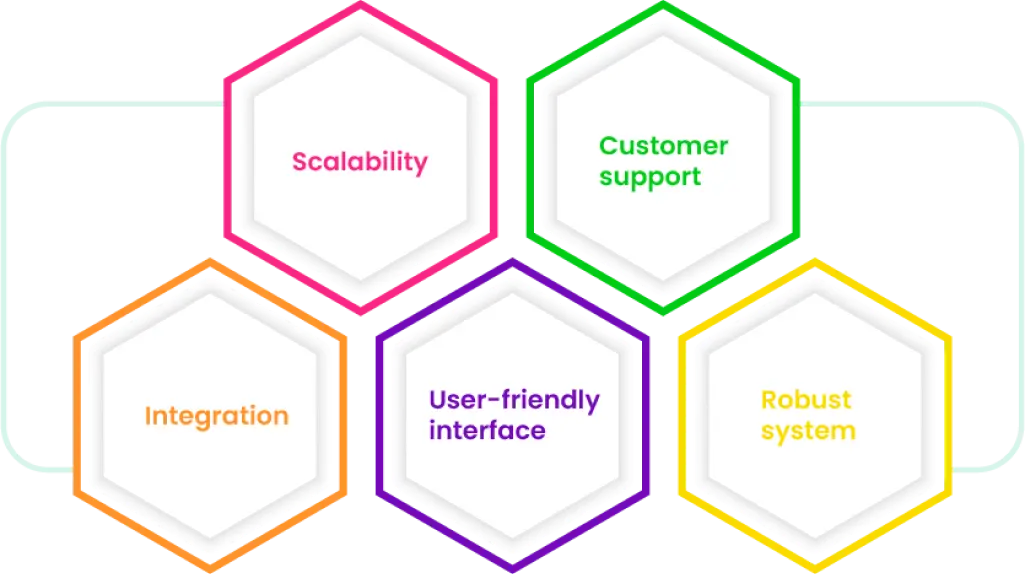
Start with the basics: functionality, integration, scalability, and ease of use. These are non-negotiable.
At Botree Software, we’re leading with advanced DMS solutions that integrate smoothly with your existing systems. Our AI/ML-powered tools support informed decision-making, so whether it’s tracking schemes or managing targets, we’re here to help you stay agile.
Choosing the right DMS is not just about meeting today’s needs—it’s about setting your business up for long-term success.
What key features to look while choosing the best distribution management software?
Why is effective distribution management crucial for business success?
What are the core functions handled by distribution management systems?
What are the main benefits of optimizing distribution channels?
How do you align DMS updates with industry regulation changes?
Can a DMS help reduce operational costs or losses in our distribution process?
Is it better to use a cloud-based DMS or an on-premise system?
Does a Distributor Management System help in managing distributor claims, schemes, and discounts?