
Christina Evangelin Ebinezer
Marketing Associate



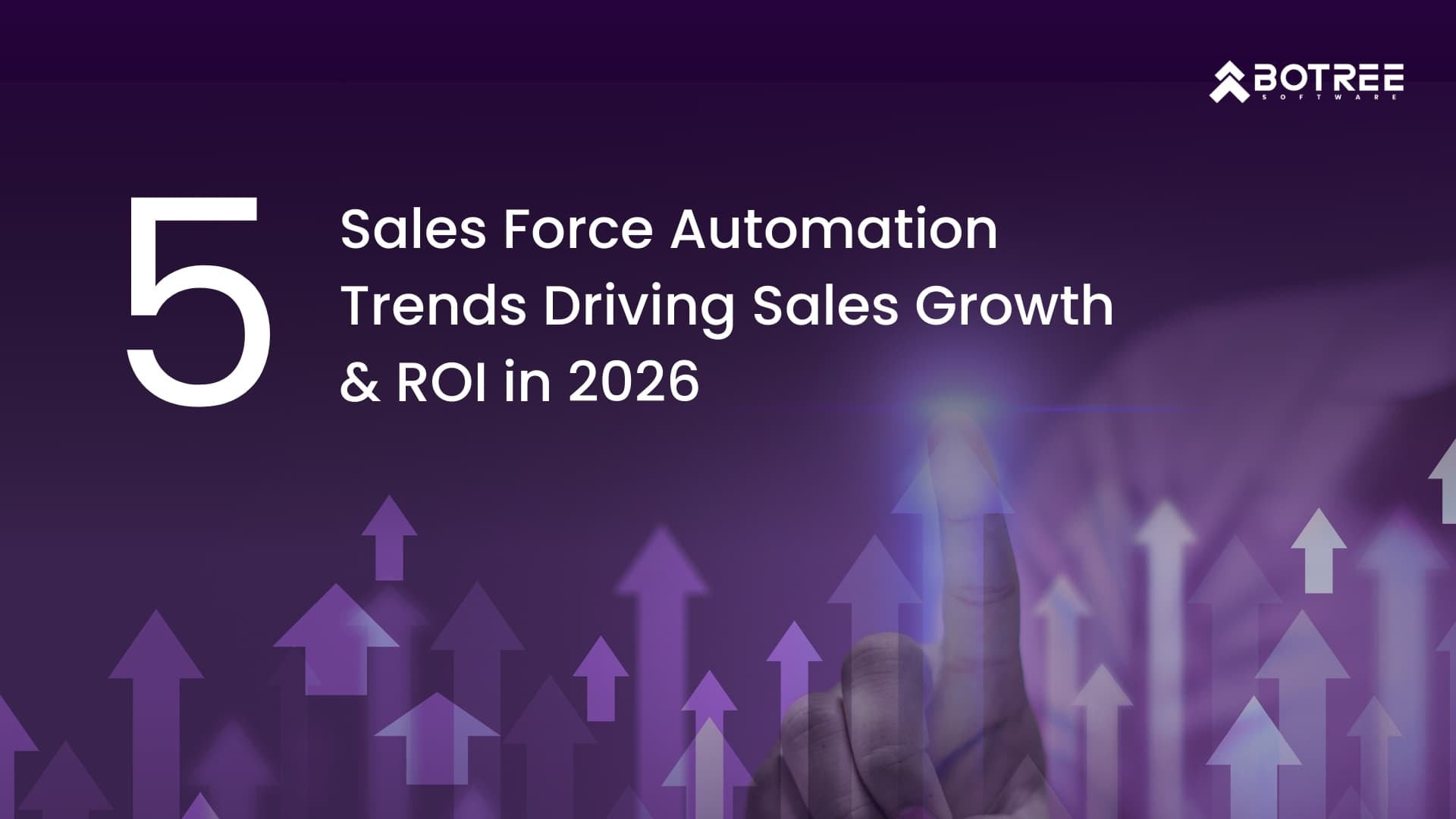
FMCG sales rarely fail due to weak demand. They fail because execution falters at scale. In 2026, this risk is greater than ever.
Markets are moving faster. Retailers want instant fulfilment. Field teams manage hundreds of outlets with tight schedules. In this situation, delays of a few hours can lead to lost shelf space and missed revenue. This is why enterprise SFA software trends in 2026 are shifting from basic automation to intelligent execution systems.
Sales Force Automation no longer just tracks visits and captures orders. AI-powered sales force automation for FMCG now predicts demand before it arises, recommends orders at the outlet level, and adjusts field activity in real time. Predictive ordering in sales automation reduces stock gaps while managing excess inventory.
Autonomous sales intelligence platforms are becoming the backbone for FMCG sales. They support field sales agent workflows by guiding reps on what to sell, which outlets to prioritize, and how to respond to changes on the ground. Real-time route optimization software enhances beat productivity while reducing travel time and fatigue.
Meanwhile, execution cannot stop at the sales app. Integrating SFA with distributor management systems makes sure every order connects with inventory, dispatch, and delivery. Without this link, even the best sales plans fail at fulfilment.
The trends that follow explain how modern SFA is changing FMCG sales execution. They also show why companies that act early will gain a lasting advantage in 2026.
Here are the top five SFA trends that will redefine sales operations in 2026:
Artificial intelligence (AI) is transforming sales forecasting by providing more accurate and dynamic demand predictions. Traditional forecasting methods relied on historical sales data and static models, but AI-driven solutions go beyond that. AI-powered sales force automation for FMCG enables faster and more accurate demand planning.
Conversational AI is becoming an essential component of sales automation. Voice assistants and AI-powered chatbots streamline communication between sales teams, retailers, and end customers.
Personalization in sales is no longer a luxury – it’s a necessity. AI-driven SFA platforms help businesses craft tailored promotions based on retailer and customer buying patterns.
With sales teams constantly on the move, smart tracking solutions ensure optimal productivity and accountability.
SFA solutions are no longer standalone tools—they are becoming an integral part of the broader business ecosystem, ensuring smooth data flow across multiple functions.
While there are numerous benefits to Sales Force Automation, selecting the right tool is crucial for achieving long-term success. The effectiveness of an SFA solution depends on how well it aligns with your business needs, integrates with existing systems, and enhances sales efficiency.
With a vast array of options available, how do you choose the right SFA software for your FMCG business? Here are key factors to consider when making this critical decision:
Choosing the right Sales Force Automation software is more than just a technology decision-it’s about finding a solution that truly understands the challenges of the FMCG industry and is easy for sales teams to adopt. The ideal solution should not only address the unique challenges of the FMCG sector but also be easy to adopt for sales teams working in fast-paced environments.
Beyond ease of adoption and industry-specific capabilities, there are several key factors that determine whether an SFA solution will deliver long-term value. From seamless integration with existing systems to scalability, AI-driven insights, and cost-effectiveness, here’s what FMCG businesses should consider when choosing the right SFA software.
See how the right SFA improves sales execution, strengthens outlet coverage, and keeps sales and distribution aligned.
SFA in 2026 marks a major change in how FMCG sales are done. It is no longer just a system that tracks past events. It now tells us what actions to take next.
In 2026, trends in enterprise SFA software show that sales automation is becoming an active decision-making tool. AI-powered sales force automation for FMCG merges demand signals, field activity, and distributor data into one seamless process. This cuts down on delays between gaining insights and acting which is vital in high-volume, low-margin markets.
Autonomous sales intelligence platforms bring structure to daily tasks. Predictive ordering in sales automation makes sure the right products get to the right outlets at the right time. Field sales workflows help reps focus on priorities rather than relying solely on their experience.
Real-time route optimization software enhances coverage, consistency, and productivity in the field. Connecting SFA with distributor management systems ensures that effective sales execution is not hindered by inventory or delivery issues.
The takeaway from these trends is clear. FMCG growth in 2026 relies less on planning cycles and more on the quality of execution. Companies that invest in smart, connected SFA will have better control over availability, costs, and speed. Those that do not will face challenges in scaling effectively.

Marketing Associate
Meet Christina Evangelin Ebinezer, our dynamic marketing associate at Botree Software. With a background in HR and marketing, and prior experience as a content writer, Christina brings a sharp eye for storytelling and a knack for crafting engaging blogs and marketing content. She’s passionate about turning ideas into words that drive impact. Outside of work, Christina finds joy behind the piano keys or the wheel—whether she’s playing a soulful tune or cruising down open roads.
Stay updated with the latest trends and insights.