
Christina Evangelin Ebinezer
Marketing Associate



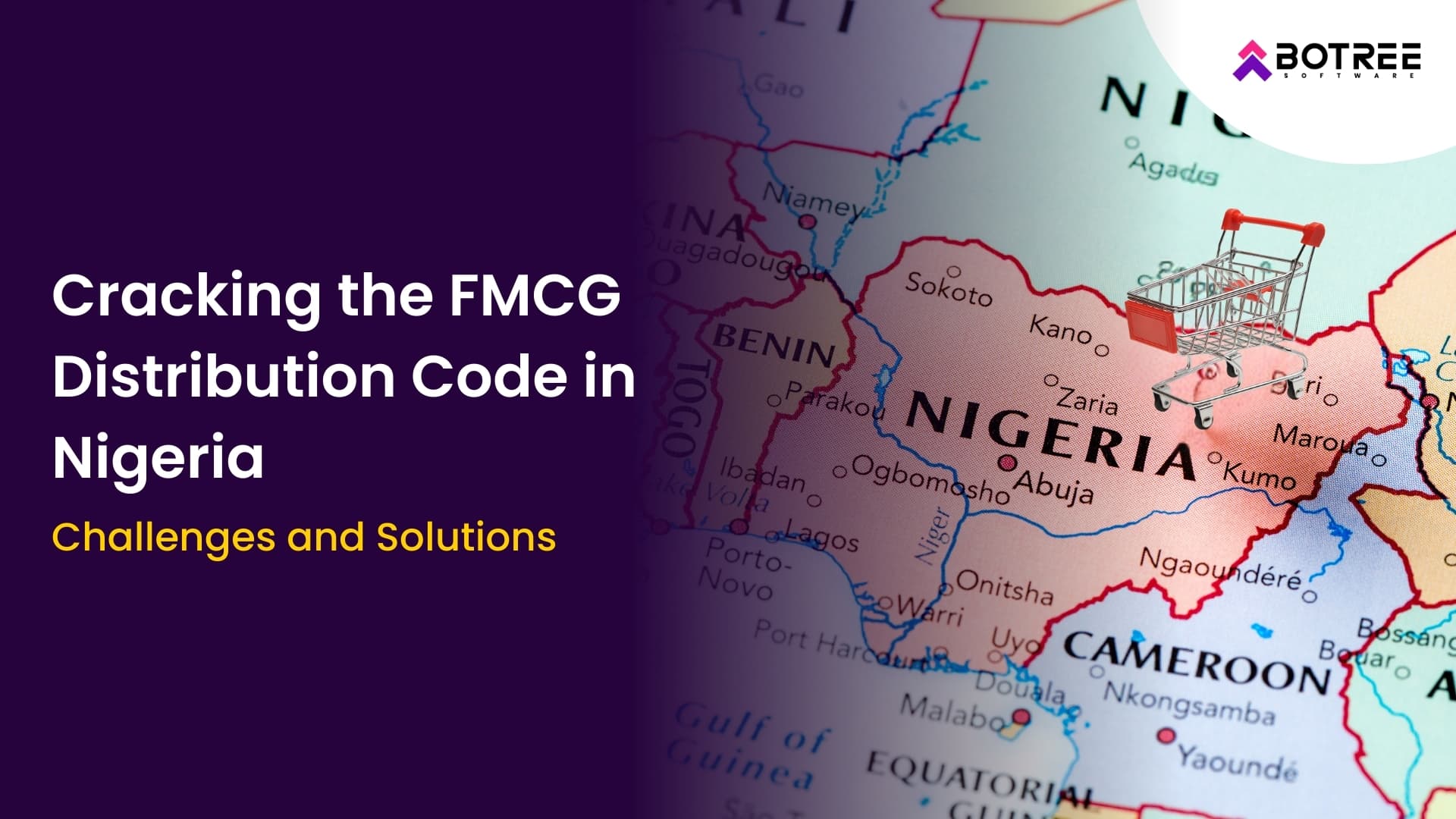
Nigeria is the largest consumer market in Africa, with over 230 million people living in various cities, towns, and trade areas. The population is young, and urban centers continue to grow. Each year, more people adopt mobile phones and the internet. Together, these factors create steady demand for fast-moving consumer goods throughout the country.
For FMCG brands, Nigeria offers a significant opportunity. However, operating at this scale can be difficult.
Products move from factories into complex distribution networks that span busy cities and underserved rural areas. Thousands of small retailers rely on timely deliveries. Unfortunately, many of these retailers operate without formal systems, consistent power, or dependable road access. A single delay can disrupt multiple outlets and sales cycles.
Competition in Nigeria’s FMCG market is fierce. Margins are tight. Regulatory and currency pressures add extra challenges. In this situation, distribution performance plays a crucial role in revenue, availability, and brand loyalty. These conditions create persistent FMCG distribution challenges across the Nigerian market.
To identify what hinders growth and how to improve, let’s examine the key distribution challenges facing FMCG brands in Nigeria.
FMCG distribution challenges in Nigeria can be grouped into three major areas. Each challenge affects how products move, how costs build up, and how brands perform at retail.
Nigeria’s economic environment remains unstable. The depreciation of the currency raises the cost of imported inputs like raw materials, packaging, spare parts, and finished goods. Inflation pushes up expenses for fuel, transportation, labor, and storage. Frequent changes in trade policies, taxes, and foreign exchange create uncertainty for FMCG brands and distributors.
Most distributors work with limited capital. When costs rise suddenly, they cut back on order volumes or postpone restocking. Pricing decisions become reactive instead of strategic.
The impact
Price instability at retail weakens consumer trust. Margins shrink as cost increases outpace pricing changes. Distributors find it hard to maintain enough inventory, leading to stockouts. Brands lose sales in high-demand areas and face uneven availability across regions.
FMCG distribution in Nigeria depends on fragmented, multi-tier supply chains. Products often go through manufacturers, master distributors, sub-distributors, and wholesalers before reaching the retailers. Gaps in infrastructure make this complexity even worse. Poor road networks slow down deliveries and lead to more vehicle breakdowns. Rural and peri-urban areas continue to be hard to serve consistently.
Traditional trade dominates sales in Nigeria, but most outlets make small, frequent orders. This increases delivery frequency and logistics costs per unit.
The impact
High logistics costs cut into profits. Stockouts rise in fast-moving locations. Brand reach becomes uneven, with a strong presence in some cities and weak coverage in others. Expanding into new areas takes time and costs money, limiting overall market reach.
Operational blind spots remain in many FMCG distribution networks. Brands often do not have real-time data on inventory levels, outlet coverage, pricing compliance, and order status. Field sales activities are tracked manually, which limits visibility into daily execution.
Weak systems lower control over distributor management across Nigeria. Trade promotions and discounts are hard to track, increasing the risk of leakage and fraud.
The impact
Slower order cycles lower fulfilment rates. Poor retail execution in Nigeria leads to missed promotions, weak merchandising, and lost shelf presence. Without reliable data, decision-making stays reactive, which slows growth in the FMCG Nigerian market.
Discover Want to Understand What’s Really Causing These Challenges?
These FMCG distribution challenges affect every layer of the FMCG Nigeria market, but the root causes are often hidden inside route to market gaps, weak visibility, and poor execution across traditional trade Nigeria.
Technology has become a key factor for growth in the FMCG market in Nigeria. As challenges in FMCG distribution become more complicated, manual processes cannot keep up with scale, speed, or visibility. Digital systems now play a central role in everything from field execution to distributor workflows and retailer ordering, giving businesses a competitive edge.
| Digital Solution | Problem It Solves | Impact on FMCG Distribution |
|---|---|---|
| Sales Force Automation SFA | Limited visibility into field activity, poor coverage across traditional trade Nigeria, weak retail execution Nigeria | Improves route planning, order capture, and outlet coverage. Increases sales team accountability and execution quality |
| Distribution Management Systems DMS | Fragmented distributor networks, weak inventory control, poor distributor management Nigeria | Provides real time inventory visibility, faster order processing, and better distributor performance tracking. Reduces supply chain issues Nigeria |
| Digital Ordering Platforms | Retailers rely on sales visits to place orders, missed visits cause lost sales | Enables retailers to reorder via mobile apps, USSD, or WhatsApp. Improves availability and reduces dependency on reps |
| AI Driven Insights | Poor demand forecasting, inefficient SKU and promotion planning | Improves demand prediction, outlet targeting, and product recommendations across the FMCG Nigeria market |
Addressing FMCG distribution challenges requires systems that work throughout the entire route to market, from field sales to distributors and retail outlets.
Botree Software helps with this by providing Botree SFA for field execution, Botree DMS for distributor visibility and control, AI-driven analytics for demand planning and execution insights, and digital ordering tools that make it easier for retailers to place and track orders.
These features help brands improve visibility across sales teams, strengthen distributor management in Nigeria, and ensure more consistent retail execution in Nigeria. With better data and control at each stage, FMCG brands can reduce ongoing supply chain issues in Nigeria and operate more effectively in traditional trade in Nigeria.
Discover Technology as a Growth Catalyst in Nigeria’s FMCG Landscape
As FMCG distribution challenges rise, technology helps brands improve visibility, execution, and scale across the FMCG Nigeria market. See how digital tools are changing routes to market, distributor operations, and retail reach in Nigeria.
Nigeria presents one of the best growth opportunities in Africa for FMCG brands. Demand is high, and the consumer base is young. Retail activity is growing in cities and emerging trade hubs.
However, FMCG distribution challenges still limit performance in the Nigerian market. Fragmented retail networks, poor visibility, rising costs, and gaps in execution reduce availability and slow growth. Brands that succeed will be those that prioritize fixing distribution first. Stronger distributor management, better retail execution, and improved control over supply chain issues will determine who secures shelf space and consumer loyalty.
Technology now plays an important role in making this possible. Software focused on FMCG, like Botree Software, helps brands improve visibility across field teams, distributors, and retail outlets. This supports better execution in traditional trade and allows for more consistent growth.
In such a competitive market, distribution is no longer just an operational function. It has become a key growth strategy.

Marketing Associate
Meet Christina Evangelin Ebinezer, our dynamic marketing associate at Botree Software. With a background in HR and marketing, and prior experience as a content writer, Christina brings a sharp eye for storytelling and a knack for crafting engaging blogs and marketing content. She’s passionate about turning ideas into words that drive impact. Outside of work, Christina finds joy behind the piano keys or the wheel—whether she’s playing a soulful tune or cruising down open roads.



Stay updated with the latest trends and insights.