
Christina Evangelin Ebinezer
Marketing Associate



Monday morning. Your sales report looks good. Targets are on track. The CRM shows active accounts and steady pipeline movement. On paper, everything seems under control.
But by Wednesday, you hear something different from the market. Retailers say they were not visited. A scheme was not explained properly. A competitor has taken shelf space in two key outlets. None of this is reflected clearly in your CRM.
This is where the sales force automation vs CRM question becomes important.
CRM tracks customer details and conversations. It provides insight into relationships and planned sales. But FMCG relies on daily field execution, beat adherence, outlet coverage, and secondary sales. That requires a different level of control.
The differences between sales force automation vs CRM are not technical. They impact how your sales team operates in the field.
In this blog, we will explore CRM and sales automation, clarify what a sales force automation system does, and help you determine what your FMCG business truly needs.
CRM, or customer relationship management system, stores and manages customer data. It tracks interactions, meetings, deal stages, and revenue forecasts.
In FMCG, CRM is mainly used for managing distributors, key accounts, and modern trade partners.
How CRM helps:
CRM works well in structured selling environments. It provides visibility into relationships and expected revenue.
However, FMCG sales goes beyond account management. It includes daily retail visits, outlet coverage, scheme execution, and secondary sales tracking. CRM is not designed for that level of field control.
A sales force automation system, or SFA, is designed to manage daily field sales operations. It focuses on execution, not just relationships.
In FMCG, SFA supports the sales team in the field. It helps reps plan routes, visit outlets, book orders, check stock, and report activities in real time. Managers can track coverage, productivity, and secondary sales as they occur.
How SFA helps:
FMCG sales software is built to scale. FMCG businesses may deal with thousands of retailers. Execution must be organized and measurable every day.
|
Aspect |
CRM | Sales Force Automation System |
Business Impact in FMCG |
| Forecasting Accuracy | Based on pipeline and primary billing | Based on real-time secondary sales and outlet trends | Improves demand planning and reduces stock imbalances |
| Trade Spend Control | Tracks commercial terms at account level | Tracks scheme execution at outlet level | Reduces leakage and improves ROI on promotions |
| Market Intelligence | Limited competitor visibility | AI-powered analysis of competitor pricing, stock, promotions, and outlet buying patterns | Enables predictive decisions, faster competitive response, and better assortment planning |
| Productivity Measurement | Tracks deal progress and account updates | Tracks daily visits, calls per day, lines per call | Improves field force efficiency and accountability |
| New Product Launch Execution | Records launch plans and commitments | Tracks SKU placement, availability, and sell-through at retail level | Increases launch success rate |
| Distributor Stock Visibility | Indirect or manual reporting | Real-time distributor stock and aging tracking | Prevents overstocking and stock-outs |
| Coverage Expansion | Tracks new account additions | Tracks numeric and weighted distribution at outlet level | Drives deeper market penetration |
| Rep Performance Transparency | Focuses on revenue contribution | Tracks attendance, beat adherence, and execution quality | Builds measurable performance culture |
| Return on Investment (ROI) | Measures revenue from billed sales and pipeline value | Measures ROI through secondary sales growth, scheme effectiveness, and rep productivity | Increases sell-through, reduces trade spend waste, and improves revenue per rep |
These SFA vs CRM differences are practical. CRM manages relationships and pipeline. A sales force automation system manages execution in the market.
CRM is important in FMCG. It helps manage distributor relationships, track modern trade accounts, and monitor revenue pipelines. It works well for structured account management.
However, FMCG growth occurs in retail stores, not in account records. When your business serves 5,000 or even 50,000 outlets, daily execution drives revenue. This is where CRM starts to fall short.
Common challenges of using CRM alone in FMCG include:
Another issue is scale. CRM is designed around accounts and deal stages. FMCG field sales focuses on volume, frequency, and coverage. Thousands of small transactions occur daily. CRM is not equipped to handle that intensity.
As a result, companies face practical problems:
This highlights the gap in the discussion about sales force automation vs CRM.
CRM manages relationships and pipeline visibility. It struggles with daily field control, secondary sales tracking, and retail-level execution. In FMCG, these limitations directly impact growth.
Many FMCG companies already use a CRM to manage distributor accounts, key customers, and track revenue. The challenge arises when field execution takes place outside that system.
This is where integrating Botree SFA becomes valuable.
Botree SFA enhances the execution layer while the CRM continues to manage relationships and commercial planning. Rather than replacing the CRM, it links ground activity with account-level visibility.
Here is how the integration works in practice:
For example, your CRM might show strong distributor performance based on billing and commitments. However, Botree SFA reveals whether reps are visiting planned outlets, if schemes are executed correctly, and how products are moving at the retailer level.
Without this integration, leadership is left blind.

Look at it from the sales rep’s perspective.
He starts his day with targets and a rough route plan. The CRM indicates that the distributor is doing well. On paper, everything seems stable.
But in the outlets, the situation is different. One retailer has too much stock. Another says they didn’t explain the new scheme. A few stores were missed last week.
None of this is clear in the CRM.
Now add Sales Force Automation.
The rep follows a set route. Missed outlets are highlighted. Orders are captured right away. Managers can see daily coverage and secondary sales.
The CRM shows what was planned. SFA shows what happened in the market.
Botree SFA is a sales force automation system designed for FMCG and distribution-led businesses. It helps companies manage field sales execution, improve retail coverage, and gain real-time visibility into secondary sales.
Here’s why Botree SFA is a smart choice for your FMCG business:
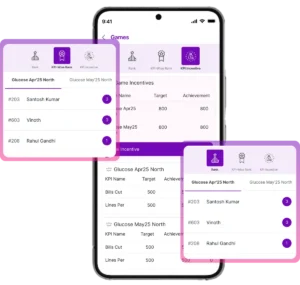
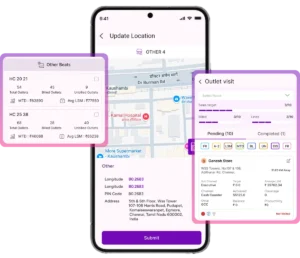
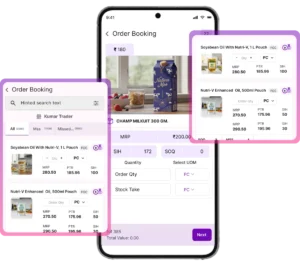
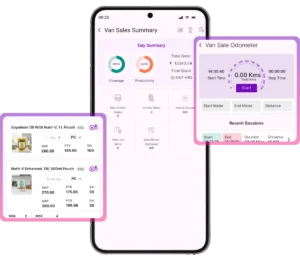
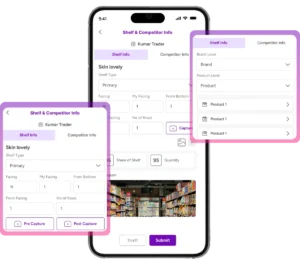
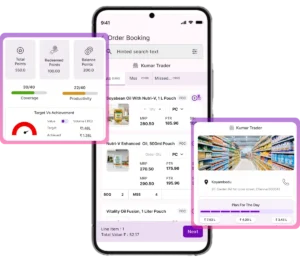
Botree SFA provides control over daily operations, visibility into secondary sales, and measurable improvements in field productivity. For FMCG businesses that operate on a large scale, this clarity significantly affects growth.
CRM vs Sales force automation is not about swapping one system for another. They are about understanding the situation clearly. CRM handles distributor relationships, key accounts, and commercial planning. SFA focuses on daily retail work, coverage, and secondary sales movement.
When both systems work together, you can shift from planned revenue to actual market performance. This approach reduces missed outlets, improves sell-through, increases lines per call, and enables faster decisions. That’s where ROI begins to appear, through better productivity, healthier stock movement, and more predictable growth.

Marketing Associate
Meet Christina Evangelin Ebinezer, our dynamic marketing associate at Botree Software. With a background in HR and marketing, and prior experience as a content writer, Christina brings a sharp eye for storytelling and a knack for crafting engaging blogs and marketing content. She’s passionate about turning ideas into words that drive impact. Outside of work, Christina finds joy behind the piano keys or the wheel—whether she’s playing a soulful tune or cruising down open roads.

Stay updated with the latest trends and insights.