
Christina Evangelin Ebinezer
Marketing Associate



FMCG companies are moving faster than before. Product are moving quickly from the factories to distributors and then to thousands of retailers, often within days or sometimes even hours. Even manufacturing, warehousing, billing, sales execution and retail coverage occurs at the same time. This is where the technology becomes a tricky question.
Most FMCG leaders ask the same question: Is ERP enough, or do we also need a distributor management system? While ERP provides solid internal control, visibility tends to drop once products reach the distribution network.
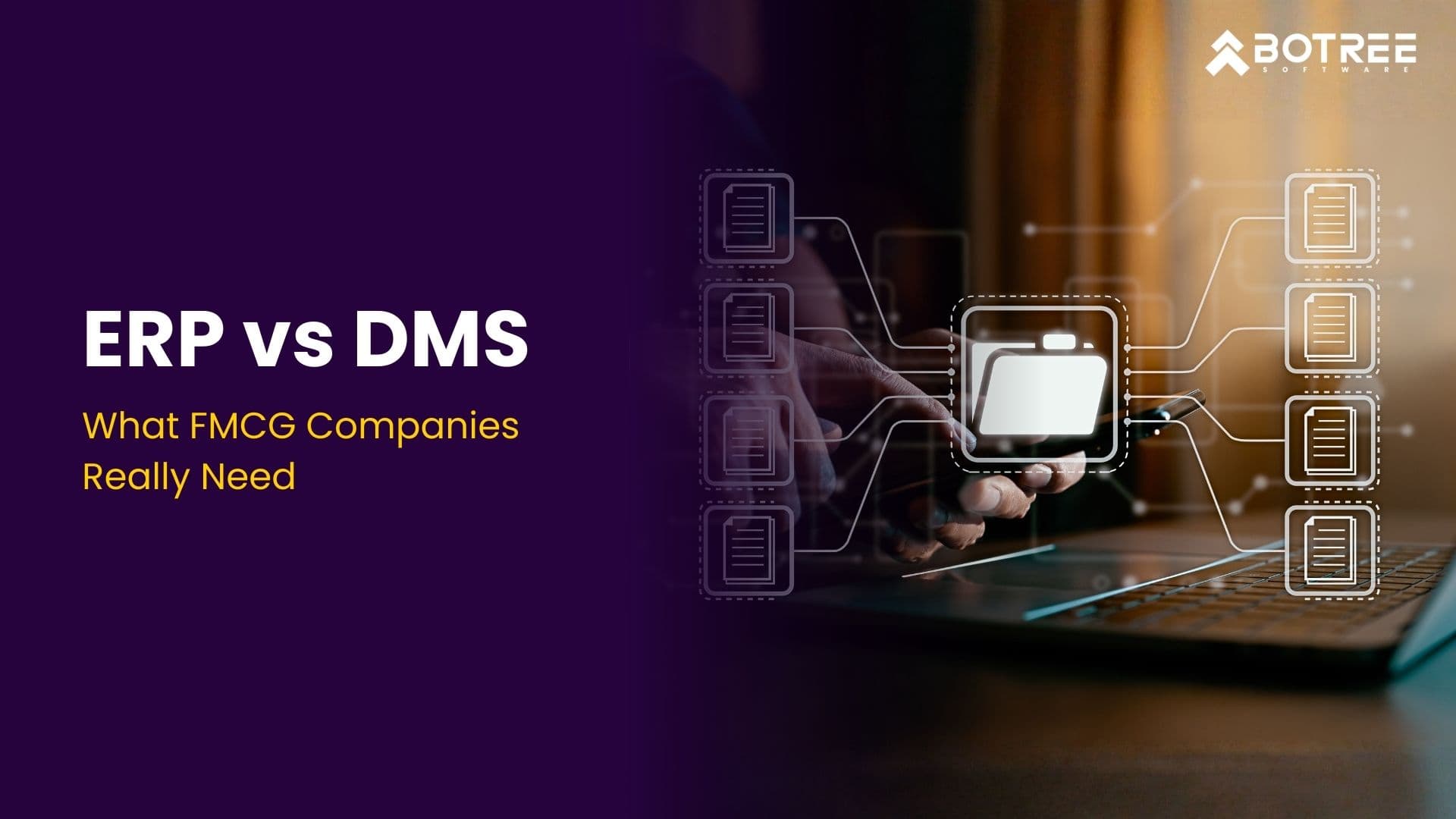
This makes the ERP vs DMS for FMCG discussion important. Today’s FMCG growth relies not only on internal operations but also on distributor performance, visibility of secondary sales, and field execution. In this blog, we explain the difference between ERP and DMS for FMCG, how they compare, and when it makes sense to use both together.
An ERP, or enterprise resource planning system, serves as the main system of record for an FMCG company. It manages internal operations, processes, and controls from one central point. For most FMCG organizations, using an ERP is essential. It keeps the business structured and compliant.
In the FMCG setting, ERP mainly supports manufacturing and production planning. It helps teams manage raw materials, production schedules, and finished goods output. Inventory and warehouse management are also included in ERP, providing visibility into stock levels across plants and depots.
ERP manages procurement and vendors. Purchase orders, supplier payments, and approvals go through the system. It also handles finance and compliance, which includes invoicing, taxation, audits, and financial reporting.
From a sales perspective, ERP oversees main sales, billing, and dispatch from the company to distributors. Once goods are invoiced and leave the warehouse, ERP’s role in that transaction is mostly complete.
The point is clear. ERP ensures internal control, process discipline, and operational efficiency. It is designed to run the company from the inside.
A distributor management system is designed to handle everything that takes place after products leave the company warehouse. While ERP focuses on internal operations, a DMS examines distributors, sales teams, and the market.
FMCG distribution involves multiple layers and changes daily. ERP systems cannot keep up with this rapid pace. A DMS oversees distributor billing and stock in near real time and tracks secondary sales, revealing what’s sold to the retailers.
Retailer data, outlet sales history, beat planning, schemes, and incentives are all included in the DMS. Field teams use mobile tools for orders and stock checks, sending real-time market data back to the company.
Solutions like Botree DMS are specifically designed for FMCG distribution. They support mobile-first execution and provide clear visibility from distributor to shelf.
| Aspect | ERP | DMS |
|---|---|---|
| Core focus | Manages internal business operations, controls, and compliance | Manages external distribution and market execution |
| Primary users | Finance teams, supply chain, manufacturing, central ops | Field sales teams, distributors, sales managers |
| Sales visibility | Tracks primary sales from company to distributor | Tracks secondary and tertiary sales from distributor to retailer |
| Retailer-level insights | Limited or unavailable, retailer data often aggregated | Detailed outlet-level data including orders, sales, and coverage |
| Distributor workflows | Handles invoicing and dispatch only | Handles distributor billing, stock, returns, and claims |
| Beat and route planning | Not designed for daily field execution | Plans, tracks, and enforces daily sales routes and coverage |
| Schemes and promotions | Basic configuration, difficult to execute at scale | Built for frequent schemes, retailer offers, and incentive tracking |
| Field sales enablement | No native support for sales reps in the field | Mobile tools for order booking, stock checks, and outlet visits |
| Real-time market data | Data updates are delayed and batch-driven | Live data from distributors and sales teams |
This table makes the difference between ERP and DMS for FMCG, shows why ERP vs distributor management system is not an either-or decision for most growing brands.
ERP is essential for managing internal operations. It oversees manufacturing, finance, procurement, and primary sales with control and structure. However, the growth of FMCG companies relies on speed in the market, the effectiveness of distributors, and retail execution. This is where gaps start to emerge.
As FMCG companies grow, they face more complexity. The number of SKUs can increase to hundreds or even thousands. Trade schemes change often. Distributor networks expand into different regions. ERP systems begin to struggle with this operational demand.
This is where the real issues appear:
This creates a visibility gap.
ERP reveals what was dispatched but not what sold. It records internal performance but misses market execution.
When companies depend solely on ERP, they risk stock imbalances, margin loss, delayed decisions, and weak control over distributors. In fast-moving FMCG environments, these gaps can develop quickly.
That is why ERP alone is usually not enough once distribution becomes complex.
In FMCG, decisions depend on the data behind them. When ERP and DMS operate separately, teams only see parts of the picture; they miss the complete story. Integration connects internal operations with what is really happening in the market.
An integrated ERP and DMS system create a single flow of information from the factory to the retailer. Primary sales, secondary sales, stock, schemes, and claims all match up, which reduces gaps and delays in decision-making.
For FMCG companies, ERP and DMS are not an either-or choice. Integration is what turns control into action and data into results.
Imagine you are running a mid-sized FMCG company that sells packaged snacks in three states.
Your ERP shows that you sent out 50,000 units of a popular SKU to distributors this month. Finance is pleased. Revenue is recorded. The dashboard looks good.
On the surface, it seems like a strong month.
But two weeks later, market sales slowdown. Retailers are not placing reorders. Some regions have too much stock, while others are running out.
Here is what really happened.
One distributor sold just 60 percent of the stock. The rest is sitting in his warehouse. Another pushed for higher sales with heavy discounts, but profits fell because the schemes were not tracked well. Sales reps planned routes by hand and missed important outlets.
The ERP does not show any of this.
It only indicates that 50,000 units were invoiced and dispatched.
Now imagine facing the same situation with a DMS in place.
The DMS shows:
Instead of reacting later, you notice the slowdown in week one. You adjust programs in the slow-moving regions. You redirect field teams to underperforming areas. You fix stock allocation before it becomes a cash flow problem.
This is the practical difference between ERP and DMS for FMCG.
ERP tells you what you sold to distributors. DMS tells you what the market actually wants.
When FMCG companies realize that ERP and DMS for FMCG work best together, the next question is practical. Which distributor management system meets the FMCG execution needs at scale?
Botree DMS is specifically built for FMCG distribution. It is not adapted from general ERP or sales tools. It addresses the specific gaps where ERP limitations slow growth in FMCG distribution.
Botree DMS supports all parts of distributor operations, from billing and stock management to visibility of secondary sales and claim management. It captures data that ERP cannot see. It shows what distributors sell, what retailers buy, and how things happen on the ground.
Field execution is another key advantage. Sales teams use mobile tools for planning routes, booking orders, checking stock, and visiting outlets. This guarantees real-time data comes from the market rather than delayed reports.
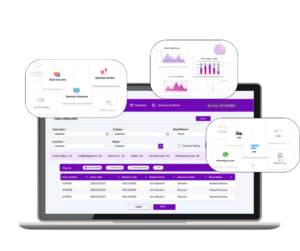
In discussions about ERP and distributor management systems, Botree DMS stands out because it doesn’t replace ERP. It complements it. By syncing data on secondary sales, stock, and claims back into ERP, Botree DMS helps FMCG leaders link internal planning with real market execution.
For FMCG companies wanting to close the gap between dispatch and shelf, Botree DMS offers the execution layer that ERP was never meant to manage.
The discussion between ERP vs DMS in FMCG is not about choosing one system over the other. It’s about understanding the purpose of each system and how they add value.
ERP helps keep the business organized and in control. However, success in FMCG is determined in the market. Efficiency in distribution, visibility of secondary sales, execution of schemes, and performance in the field are what really drive growth. This is where a distributor management system becomes crucial.
In a competitive FMCG world, using the right tool for the right task is essential. ERP manages the company, while DMS manages the market. Together, they provide the visibility, speed, and control needed for steady growth.

Marketing Associate
Meet Christina Evangelin Ebinezer, our dynamic marketing associate at Botree Software. With a background in HR and marketing, and prior experience as a content writer, Christina brings a sharp eye for storytelling and a knack for crafting engaging blogs and marketing content. She’s passionate about turning ideas into words that drive impact. Outside of work, Christina finds joy behind the piano keys or the wheel—whether she’s playing a soulful tune or cruising down open roads.
Stay updated with the latest trends and insights.